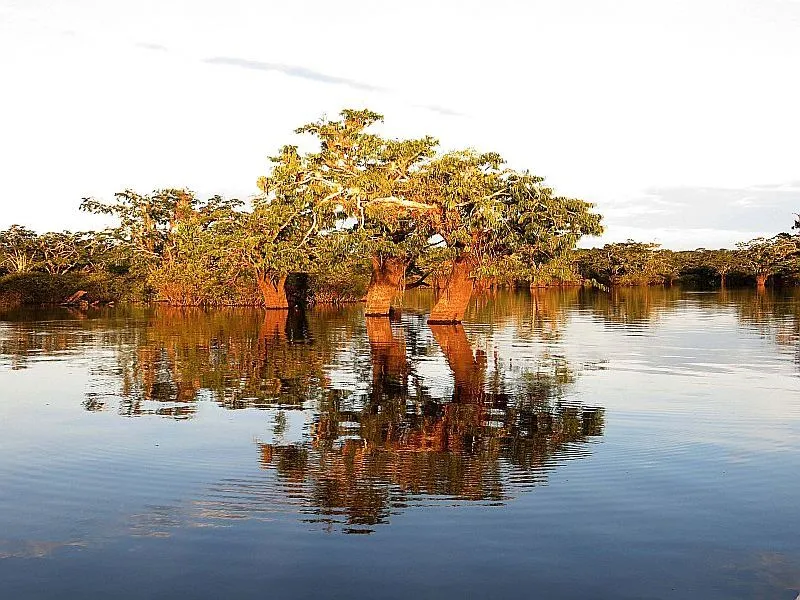
You’re standing on our dock at the Cuyabeno Lodge at Lake Cuyabeno. You wonder: can I swim with pink dolphins, or Botos, in Cuyabeno?
The short answer is nuanced: while you can swim in Lake Cuyabeno, where pink river dolphins live and will surface a few meters from where you’re treading water, “swimming with pink dolphins” as a marketed activity is a different thing entirely, and the gap between those two ideas matters both legally and ethically. This article covers what the reserve rules actually say, what the safety picture honestly looks like, how botos behave around humans, and where and when your odds of a genuine sighting are highest.
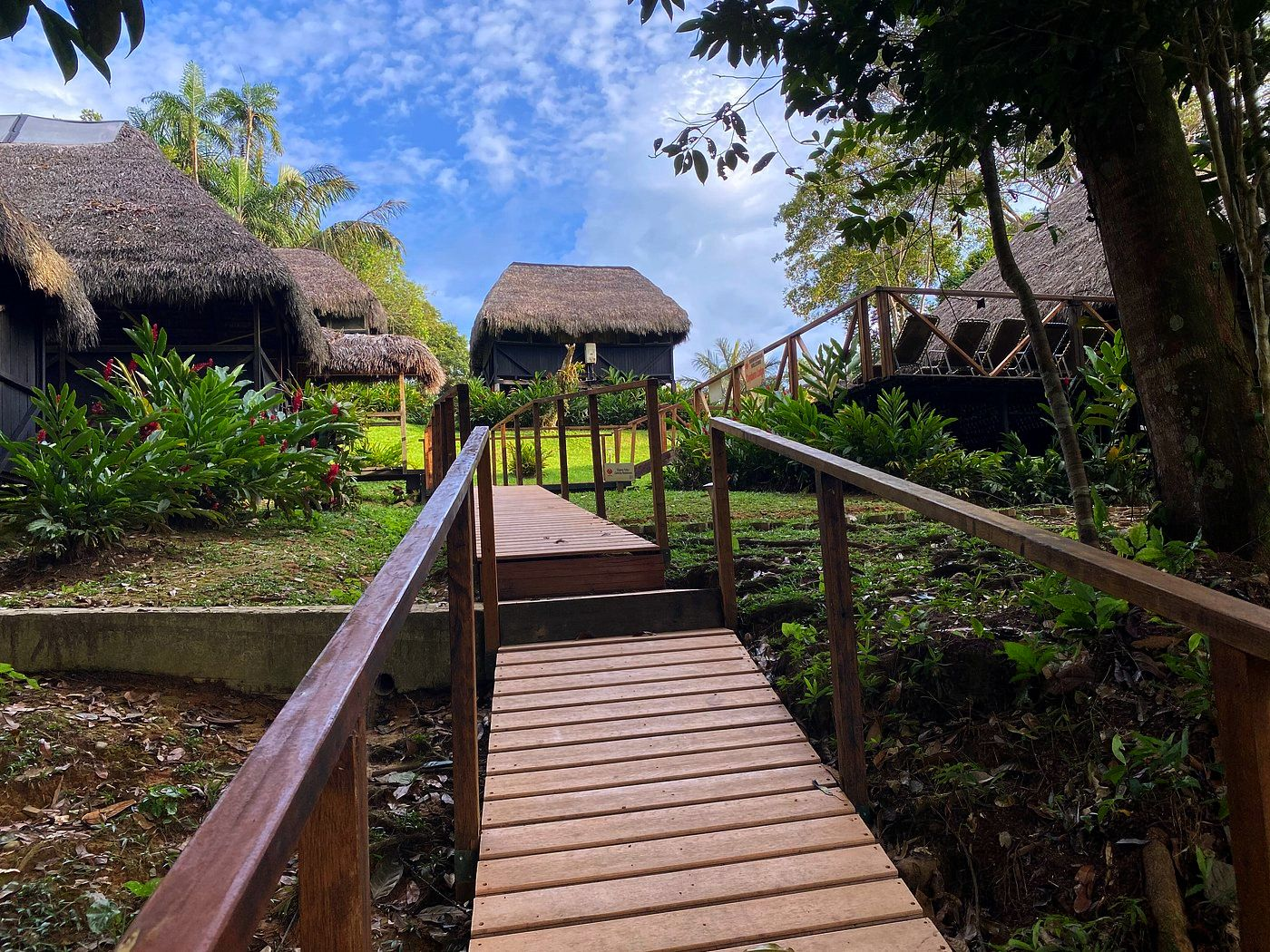
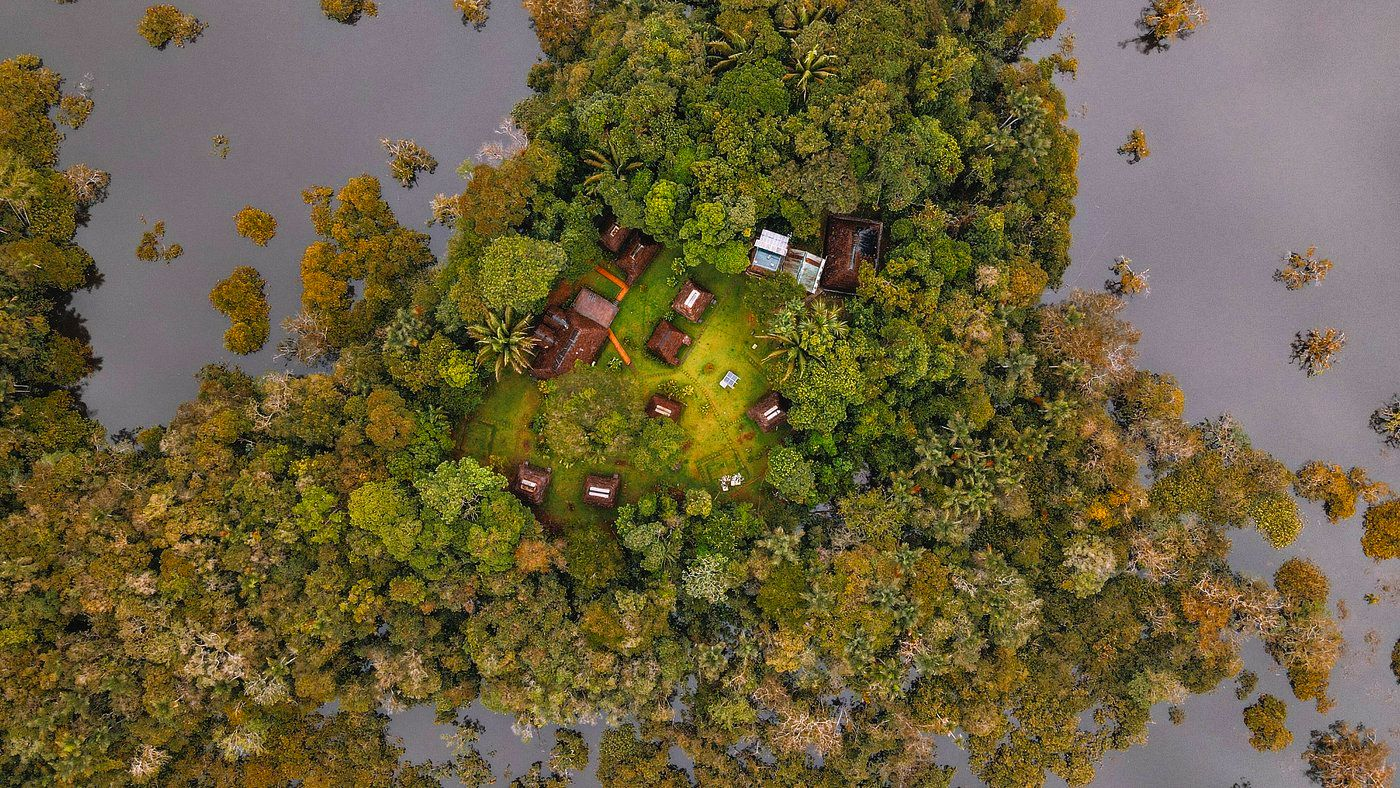
At our Cuyabeno Lodge, guests staying on our island in Lake Cuyabeno can theoretically step off the dock directly into dolphin-frequented water. No 30-minute boat commute, like from the Dolpin Lodge, which the name misleadingly suggests.
Dolphin Lodge, misleading name for Dolphin viewing
In fact, the Dolphin lodge, like most Cuyabeno Lodges, is located downstream from Lake Cuyabeno, where the Pink River Dolphins are viewed most frequently. The Cuyabeno Lake is in fact, where the best wildlife viewing is located and the river lodges need to ferry back and forth between 20 and 35 minutes to the lake for viewing wildlife and Pink River Dolphins. So they are not ideally located for dolphin viewing.
Another fact to be aware off, is that the Dolphin Lodge uses a misleading name for its marketing: Cuyabeno Wildlife Center, which is legally registered in the Netherlands. With this name, it suggests that there is a wildlife center in Cuyabeno, falsely suggesting there is some kind of research station or government facility that focuses on protecting or investigating wildlife.
However, there is no such thing in Cuyabeno. There is NO WILDLIFE CENTER. It is afake name. People think they get to go to the best location to see wildlife when booking a program in through the “Cuyabeno Wildlife Center” website. But they end up booking the Dolphin Lodge, which has to ferry back and forth each time to get to Lake Cuyabeno to watch wildlife and Pink River Dolphins. Moreover, the Dolphin Lodge has a river view as opposed to the world famous lake view of the Cuyabeno Lodge. There is nothing wrong with the Dolphin lodge but it is NOT a wildlife center and it is not ideal for dolphin watching.
Another trick that these people do is handpicking visitors in the Dolphin Lodge to post perfect reviews on Tripadvisor. Again this is misleading. Most visitors at the Dolphin lodge will post on Dolphin Lodge in Tripadvisor, which has a reasonable but not perfect review record like all other lodges. By hand picking people to make perfect reviews of the non-existing Cuyabeno Wildlife Center, these individuals enforce the idea of a perfect hosting location, that in reality is NON-EXISTING. In fact none of the lodges has a perfect Tripadvisor score.
Can You Swim with Pink Dolphins in Cuyabeno? What the Reserve Rules Actually Say
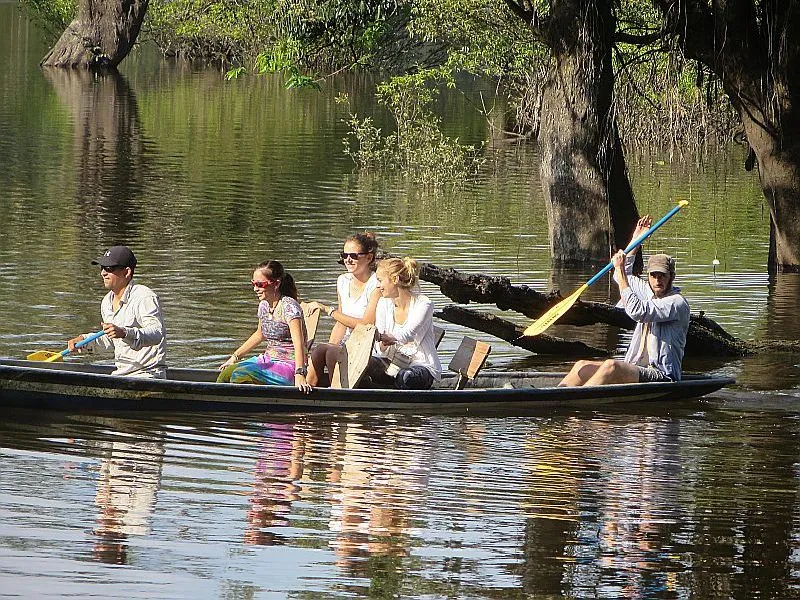
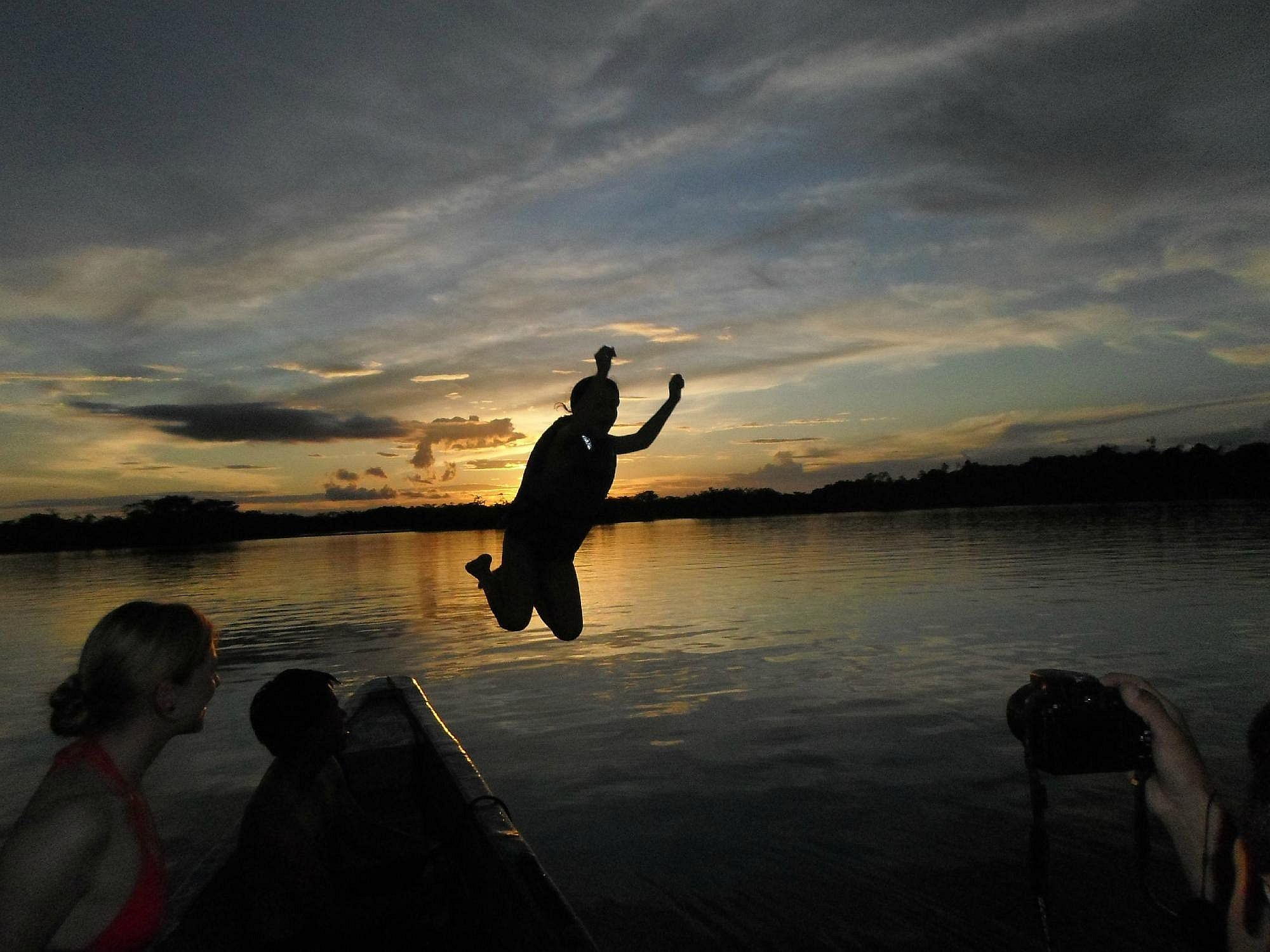
Several tour operators market “swim with dolphins” experiences in Cuyabeno, and the language creates real confusion. The Cuyabeno Wildlife Reserve‘s conservation protocols, aligned with Ecuador’s Ministry of Environment regulations, are specific: swimming in designated areas like Lake Cuyabeno is permitted under guide supervision, but actively approaching, pursuing, or interacting with wildlife, including Amazon river dolphins, is explicitly prohibited.
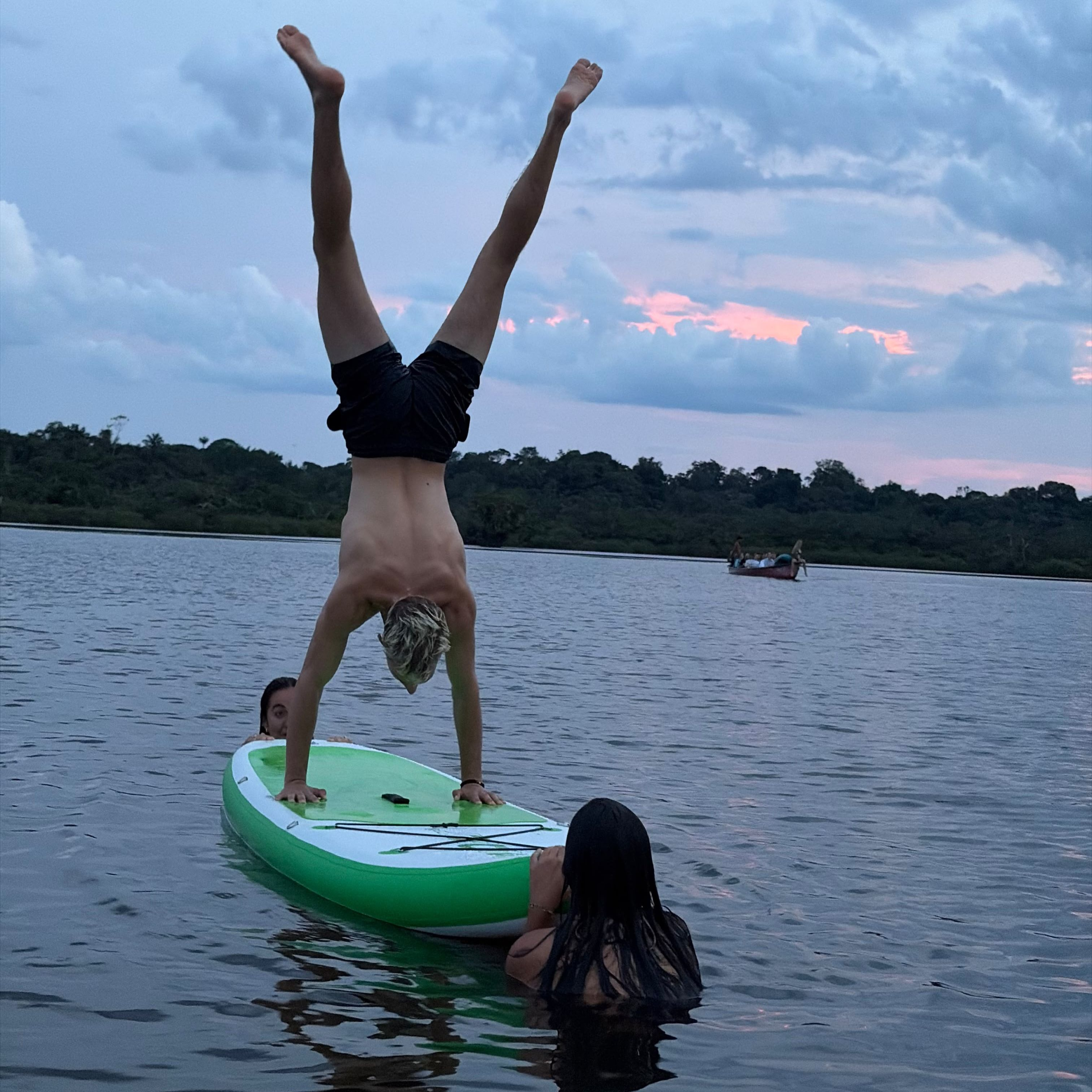
What many operators actually mean when they advertise the experience is this: you swim in a lake where dolphins happen to live, and if a boto surfaces nearby, that moment belongs to you. That’s legal, genuinely magical, and honest. What’s not permitted is positioning yourself in a dolphin’s path, pursuing one after it dives, or staging any kind of interaction. The distinction sounds minor until you’re in the water and a dorsal fin appears ten to twenty meters away, and you understand immediately why chasing it would ruin everything.
What Pink River Dolphins Are Actually Like Up Close
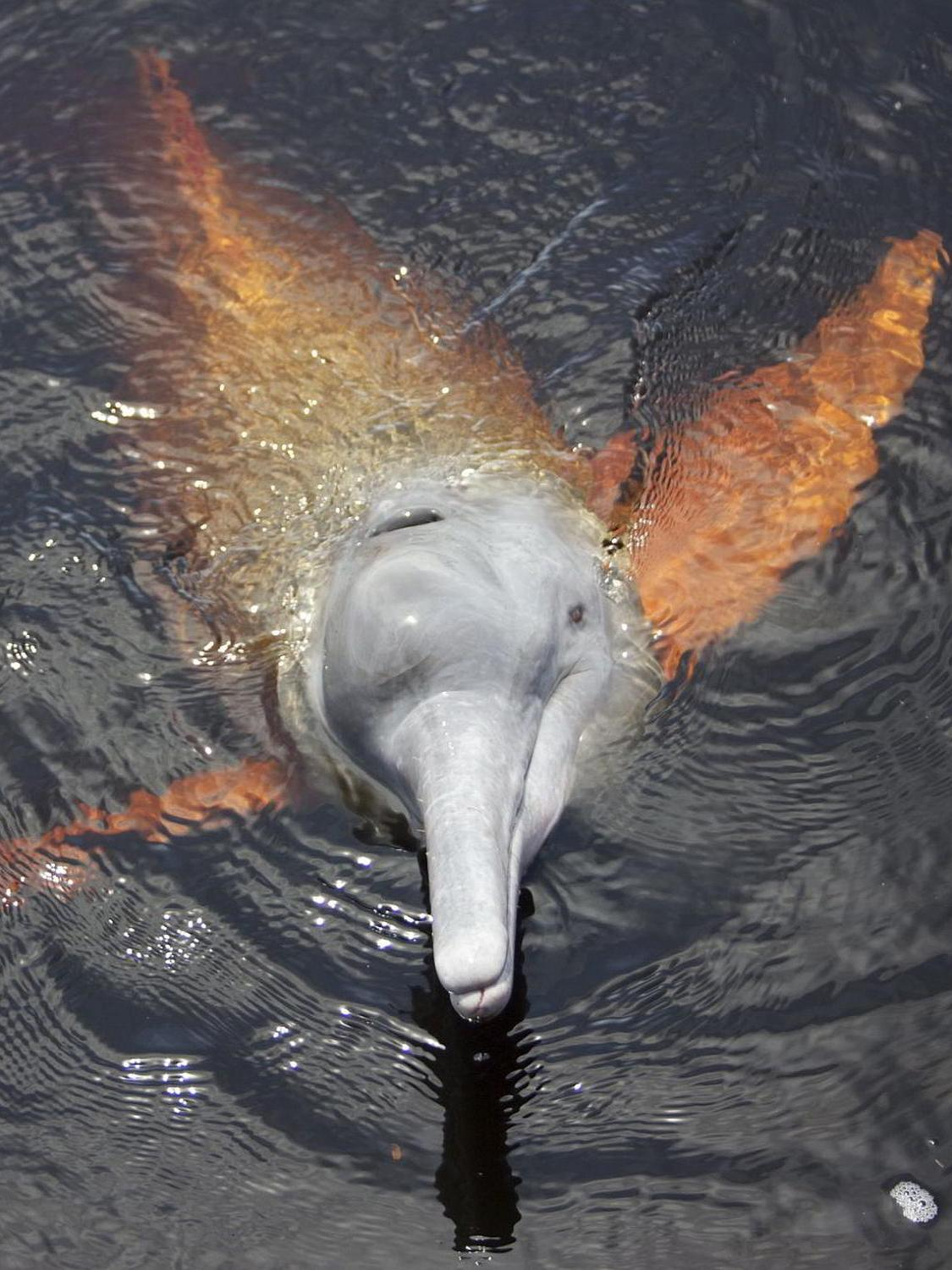
The boto’s reputation as a shy creature and its behavior around humans exist in real tension. In the wild, pink river dolphins are mostly solitary living as mother and child or in very small family bands. Occasionally they follow a canoe as happened to me, Dr. Daan Vreugdenhil, which is a form curiosity or a feel of brief companionship an certainly not conditioned behavior as no operator around Lake Cuyabeno feeds dolphins.
What you see above the waterline is almost nothing: a blowhole, a brief arc of mostly gray skin, then gone. Botos breathe through the surface and dive again in seconds, which is why patience matters far more than proximity. Sightings typically involve one animal or a mother with her young, occasionally a loose group of up to five, I saw recently. They are not schooling fish; you’re looking for a single surfacing in the wide expanse of “coffee with cream” colored or black water.
If you’re swimming in a designated lake zone and dolphins are nearby, they are not known to circle at distance or break the surface nearby.
The Honest Safety Picture for Swimming in Cuyabeno’s Black Water
Cuyabeno’s lakes are blackwater systems, stained dark by tannins from decomposing vegetation, but usually colored to a deep “coffee with cream” color because of some sediments suspended in the water. Once you submerge, visibility is very low, usually less than a meter.
Guide Protocols and Zone Restrictions
The way guides manage these risks of undesirable animal encountes is straightforward and non-negotiable. Swimming is restricted to designated deep-water zones; Cuyabeno Lake is the primary site. The open water and natural acidity there make shallow-water predators significantly less prevalent. Guide supervision is not optional, independent swimming in the reserve is prohibited under the same rules that govern all wildlife access.
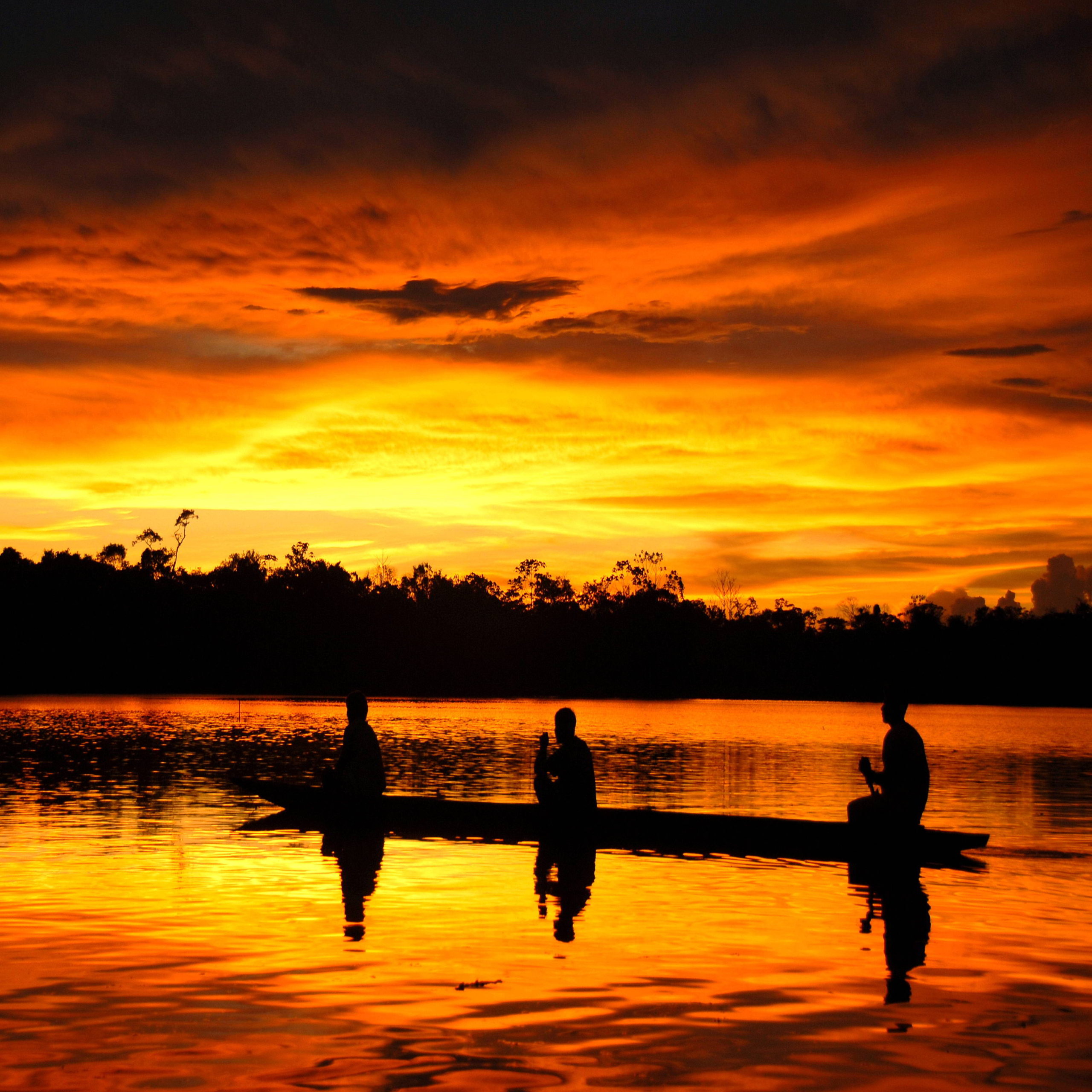
Only the Cuyabeno Lodge is located right near the designated swimming area on Lake Cuyabeno. All the downstream river lodges have to commute 20 – 35 minutes to go swimming at the designated swimming area in the Cuyabeno Lake and watch the spectacular sunsets, while they have just river view in stead of lake view.
Swimming with Pink Dolphins in Cuyabeno: Best Times and Spots
The wet season, roughly April through July, produces the most consistent dolphin sightings in the reserve. Higher water levels allow botos to spread into flooded forest, which makes them more active, more mobile near the surface, and more visible from canoe. During draughts, dolphins leave the area. With the lake filled, dolphin sightings are almost guaranteed. Note that source data on seasonal patterns varies, and either window can produce memorable sightings depending on conditions that year.
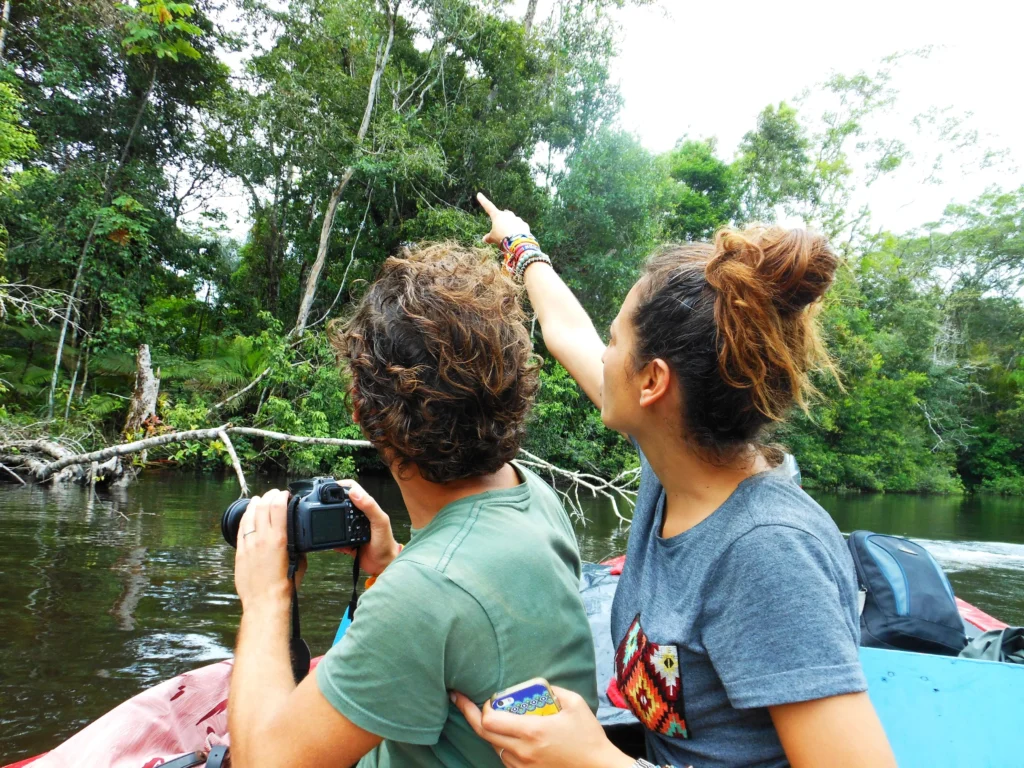
Lake Cuyabeno itself is consistent dolphin habitat throughout the year, and this is where our Cuyabeno Lodge’s island position becomes a practical logistical advantage. Guests don’t need riding a boat for thirty minutes to reach the water where dolphins feed. They’re watching from deck chairs sitting on the sunset deck or our dock, where I recently watched a group of some 20 Giant Otters feeding on recently hatched caimans from a nesting site on our premises, while watched by a pink dolphin. In fact, these otters and dolphins sometimes are found together, although it is unknown why. There are some speculative explinations, but I as a scientist want to shy away from that.
How to Choose a Tour or Lodge That Handles Wildlife Responsibly
The clearest filter for separating ethical operators from those treating wildlife as props is their language around guarantees. A trustworthy guide describes dolphin encounters as opportunities, not activities. The animals choose the proximity; the guide chooses the location and the patience. Any operator promising a guaranteed swim with pink dolphins is either misrepresenting what’s legally allowed under reserve regulations or conditioning animals in ways that harm them long-term
The lodge’s physical location relative to the water also determines how much real access you get. A lodge, like the Dolphin Lodge – which suggests the proximity of dolphins, actually sits almost thirty minutes downriver from Lake Cuyabeno, where most dolphins reside. For watching dolphins it requires a commute twice for every excursion: once to get there. During a three-day or four-day itinerary, that adds up to hours spent in transit rather than in position, so the location of the Dolphin Lodge is definitely not ideal for dolphin spotting.
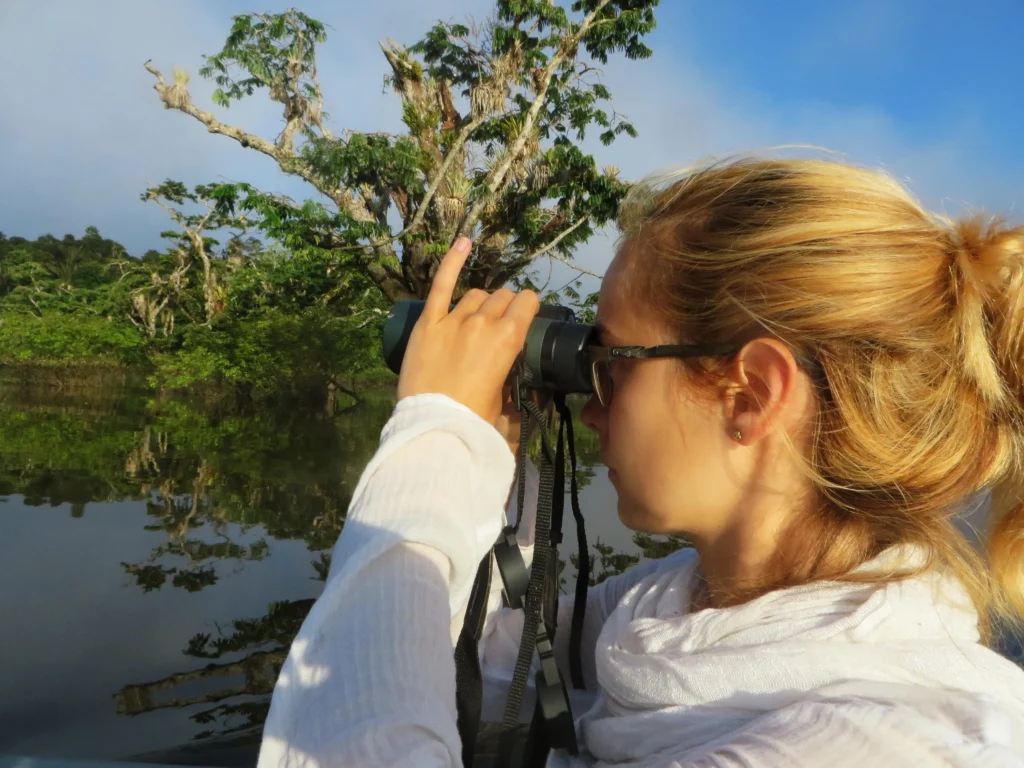
At Cuyabeno Lodge, our guides with their eagle eyes watch for fins emerging, and tracking which channels the dolphins used the previous morning.
The Encounter Worth Having
Swimming with pink dolphins in Cuyabeno is a real experience available to visitors under guide supervision in designated zones. Amazon river dolphins may absolutely appear beside you while you’re in the water, and those moments rank among the most memorable wildlife encounters available anywhere in the Amazon.
Travelers who want to wake up already in dolphin territory, step off the dock of our Cuyabeno Lodge at first light. Our Cuyabeno Lodge – being the first – has operated on this island for almost 4 decades, and the wildlife encounters here are the product of years of respectful, patient, guide-led observation. When you’re ready to plan your pink dolphin tour in Cuyabeno, reach out to us directly via WhatsApp and we’ll walk you through the itinerary that puts you in position for the encounter you came to find.