CUYABENO OR YASUNI, WHICH IS BETTER?
Choosing between Cuyabeno vs Yasuní is not as hard as it seems for Ecuador Amazon rainforest travelers. Yes, you’ve picked the country. You’ve picked the Amazon rainforest of Ecuador. You are contemplating Cuyabeno. Then someone mentions Yasuní. There are a few very famous lodges along the Napo River and even a luxurious Napo River cruise. Both offer a wide range of mammals and birds, and the kind of wildlife density that justifies a transatlantic flight. But they are genuinely different experiences, built around different landscapes, different access routes and different pricing. Choosing between however will shape every morning you’ll spend in the jungle.
The Cuyabeno Lodge has a particular stake in this conversation. I am conservation ecolodgist, Dr. Daan Vreugdenhil, the founding father of the Cuyabeno Wildlife Reserve and I built the first eco-lodge in Cuyabeno, but on the entire mainland of Ecuador. Being the first I build my lodge on an island directly on Lake Cuyabeno, a location that matters for reasons this article will make clear. Now, which reserve you chose depends on your available time and more than anything, budget.
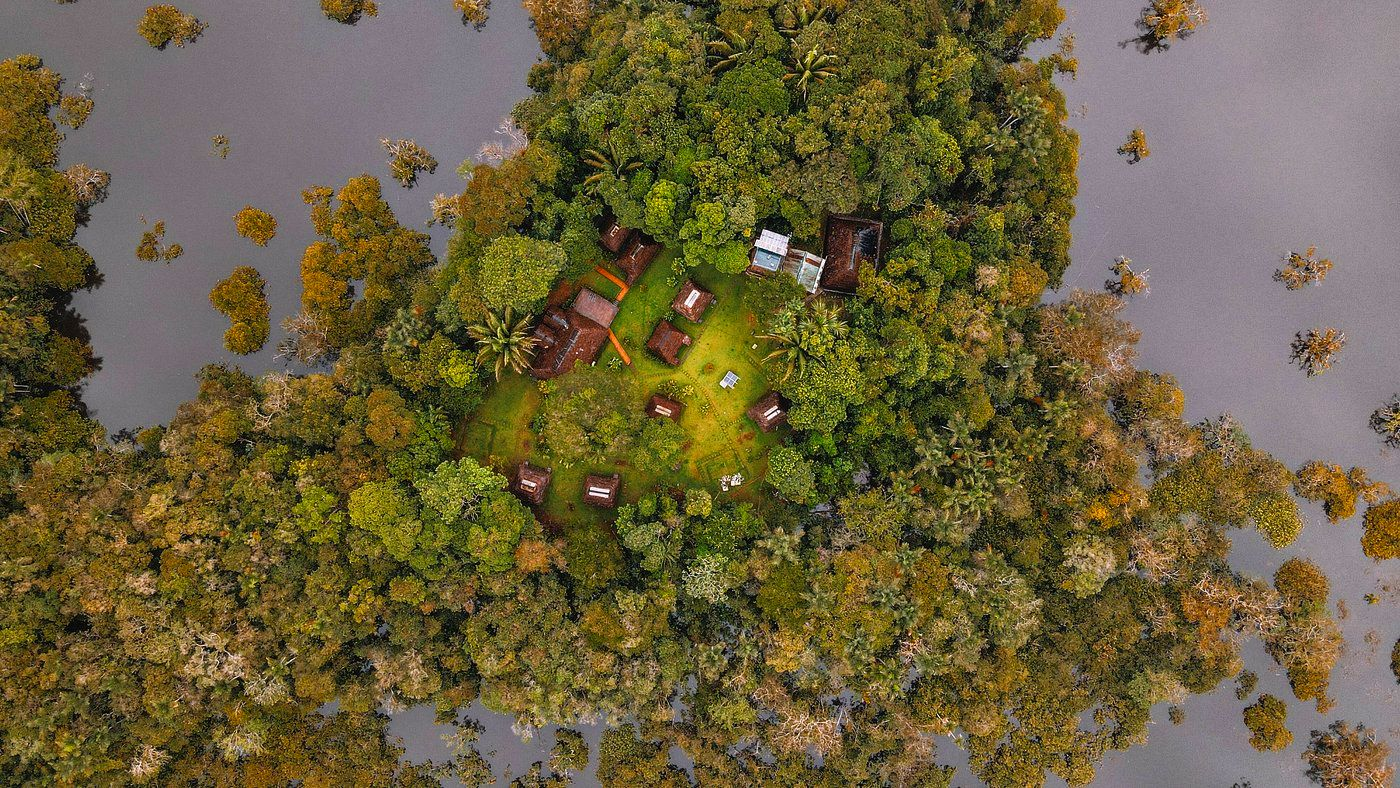
The Cuyabeno Lodge on a seasonal island in Lake Cuyabeno (Laguna Grande).
Cuyabeno vs Yasuní: what each reserve puts in front of you
Yasuní seems to holds the edge on raw species counts, and those numbers are genuinely staggering. The park supposedly has around 567 to 595 bird species, 169 mammal species, and approximately 150 amphibian species, making it one of the word’s most biodiverse places on Earth. But the question is, who is counting and where? First of all, scientists of the Catholic University of Quito is researching Yasuni, adding lots of species to the park, whereas Cuyabeno does not have a research station.
Cuayabeno has no research of wildlife station at all, so its birdnumbers are really unknown. In fact, the self proclaimed Cuyabeno Wildlife Center is a misleading name for the Dolphin Lodge, downstream of the Cuyabeno Lake. There is no institutional wildlife center or specific location to protect or raise wildlife. The name is actually registered in the Netherlands, where it is also hosted. So, in Cuyabeno, there is no institutional research with systematic observations by scientists adding to a make up a docuemented species list.
So, where does the birdlist of Cuyabeno come from? Well, when I, Dr. Daan Vreugdenhil, started ecotourism in the Amazon of Ecuador in 1986, I needed a species list to compete with the species list of 600+ kept up by his friend Dr. Dan Tallman. So, my head guide at the time, Dr. Tjitte de Vries and I, we took the book “Birds of Ecuador by Robert Ridgely” and marked all the species that were likely to occur in Cuyabeno. I still have that list of 530+ species of birds of Cuyabeno. That is where this number actually originated. There now is the famous website, ebird, where birdwatchers can upload their observations. Unfortunately none of the Cuyabeno guides do so. This is why the birdlist of cuyabeno remains unknown and all the Cuyabeno bird species numbers floating around on the internet are imaginations of website administrators. What is certain though: If the little reserve of Limoncocha could record 600+ species, both Cuyabeno and Yasuni should have far more species in those vast territories.
But, what most people don’t realize, the so-called Yasuní lodges and River hotel, are in reality NOT AT AL in Yasuni and their visitors never enter the national park. They are in fact, establishments at private land or on a location they have in use from an Indian comunity. Famous lodges like La Selva, Napo Wildlife Center and Sachi Lodge are all built on secondary forest locations outside the park. In fact, these lodges organize their excursions withing a radius of less than a kilimeter of their facilities. Cuyabeno on the other hand is in the heart of a nature reserve, and the lodges are allsurrounded by primary forest. Therefore, I call those lodges Yasuni/Napo lodges, as they are NOT in Yasuni, while all guests of those lodges thinks he/she is going to the Yasuni National park.
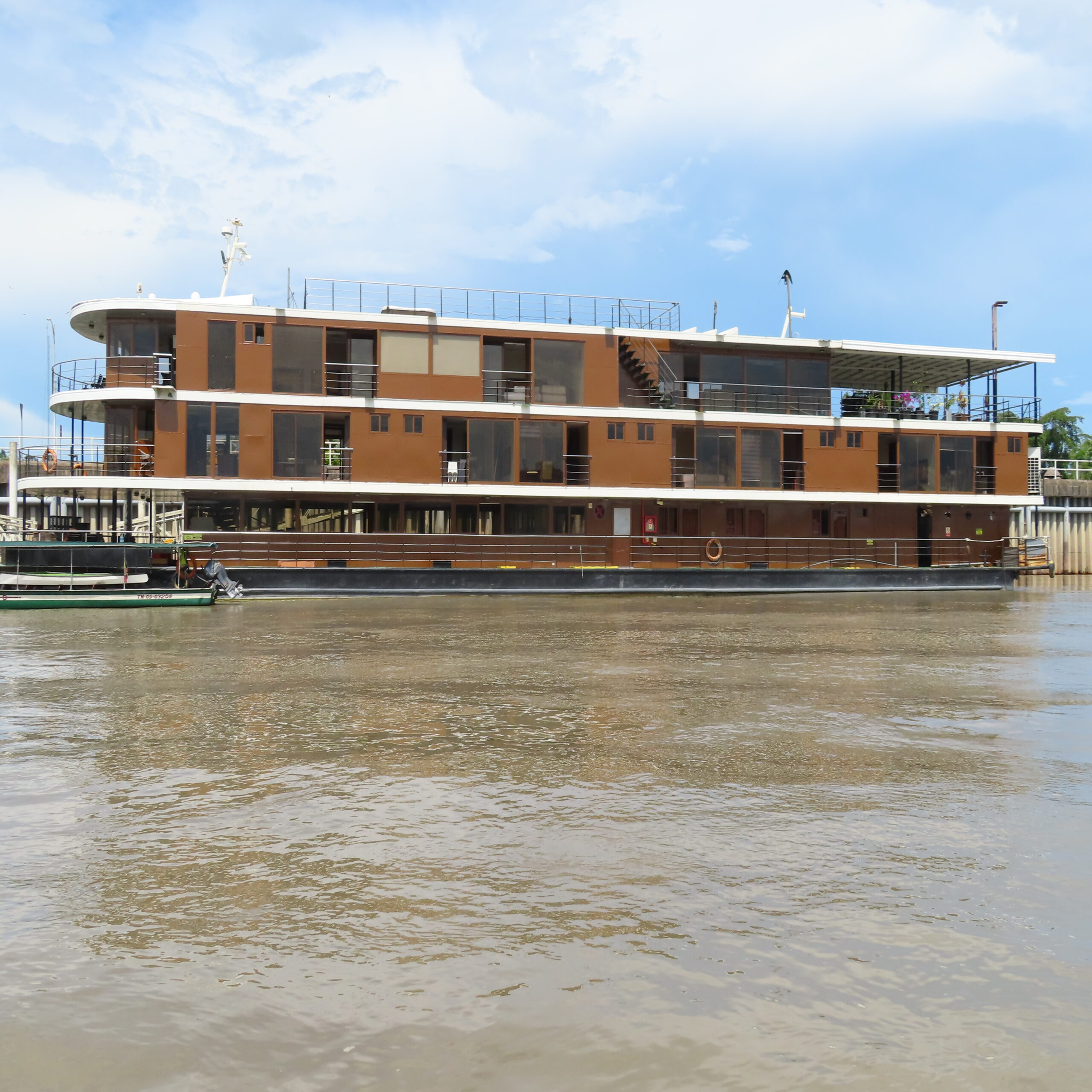
Napo River cruises never venture into the Yasuni National Park. They frequent sites at the park’s buffersone.
So, the species list of Yasuni is totally irrelevant for the Yasuni/Napo lodges, as hardly anybody goes there.
Now the questio is, can one get at all into Yasuni national Park? Yes one can. You can go out by car and drive into the heart of the park, but from the road from Coca, but you really don’t see a lot. The only other location to enter the park is right at the border with Peru, where you can navigate up the Yasuni River to Lake Jatun Cocha and beyond on the river. But there are no lodges there. I organize tours to Lagarto Cocha from Coca, that start our visiting Lake Jatun Cocha before entering the lakes of Lagarto Cocha.
Cuyabeno on the other hand is totally different: virgin forest and aquatic landscapes with far more abundance of wildlife which is also much more visible. The reserve’s 14 vs 1 lakes and river systems creates conditions most Amazon lodges anywhere in the Amazon countries simply can’t replicate. Pink river dolphins, giant river otters, black caimans, and a remarkable range of canopy birds are spotted from the water itself, without most of the time having to hike into dense forest. Cuyabeno’s bird list of aforementioned 530+ species is irrelevant too, as there really is no way of telling which reserve has the greater species list. Anyway, for most travelers, the difference in species counts is irrelevant. What matters is where you can actually observe the greatest number of species yourself during your stay, and that is by far Cuyabeno, particularly adding lots of aquatic and shore birds.
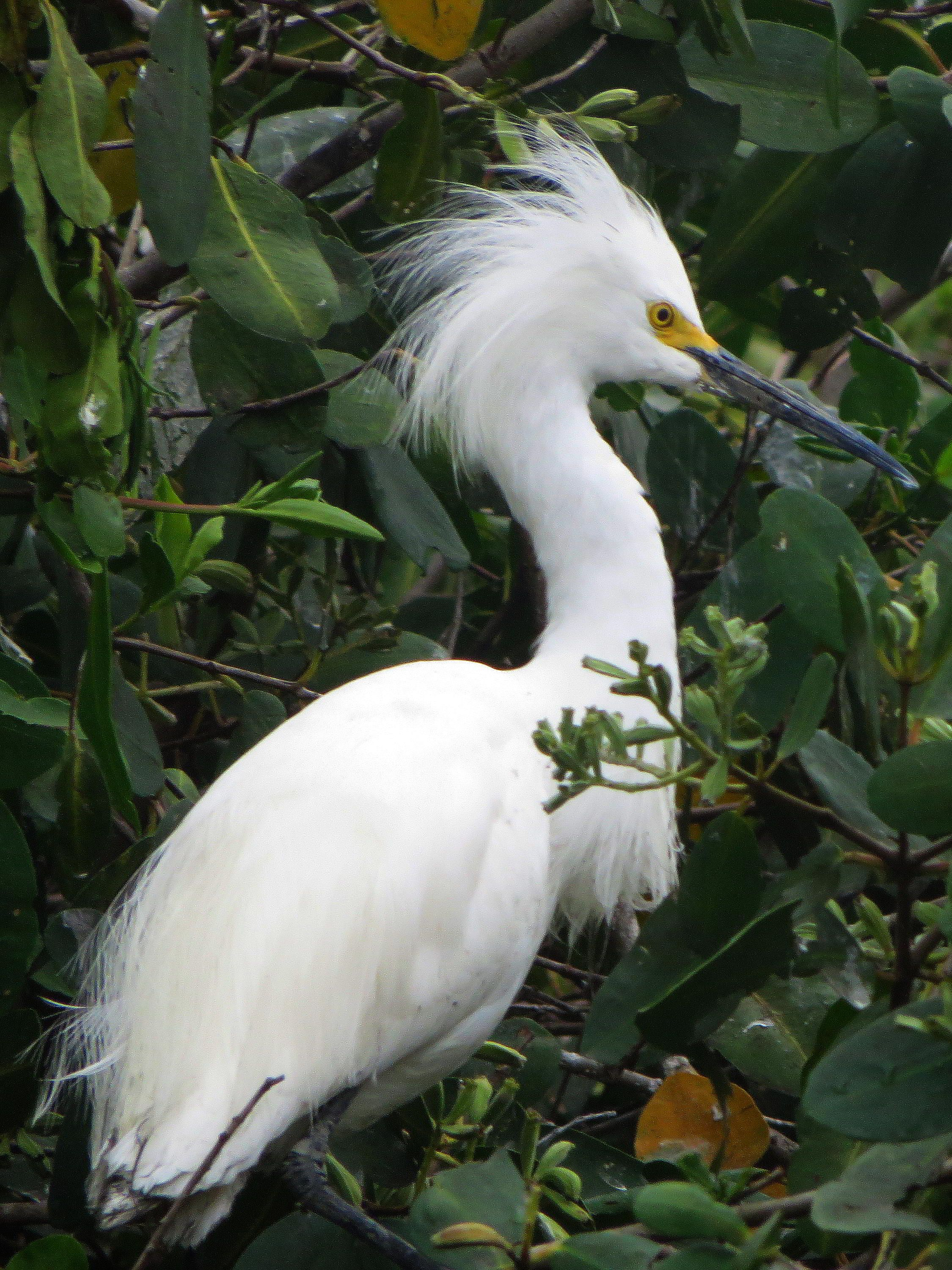
Snowy egrets are common water birds in Cuyabeno.
Pink river dolphins: Cuyabeno’s signature advantage
Both reserves have pink river dolphins. The distinction is how often you see them and from where. At the Cuyabeno Lodge, guests regularly report dolphins appearing directly on the lake near the lodge, sometimes even right from the dock. The lake and flooded forest channels create naturally high encounter frequency, particularly in high-water months when dolphins swim up the Cuyabeno River and feeding creeks. In Yasuní, encounters happen occasionally along the Napo River and Tiputini River, but for some reason, they prefer the lakes and rivers of Cuyabeno.
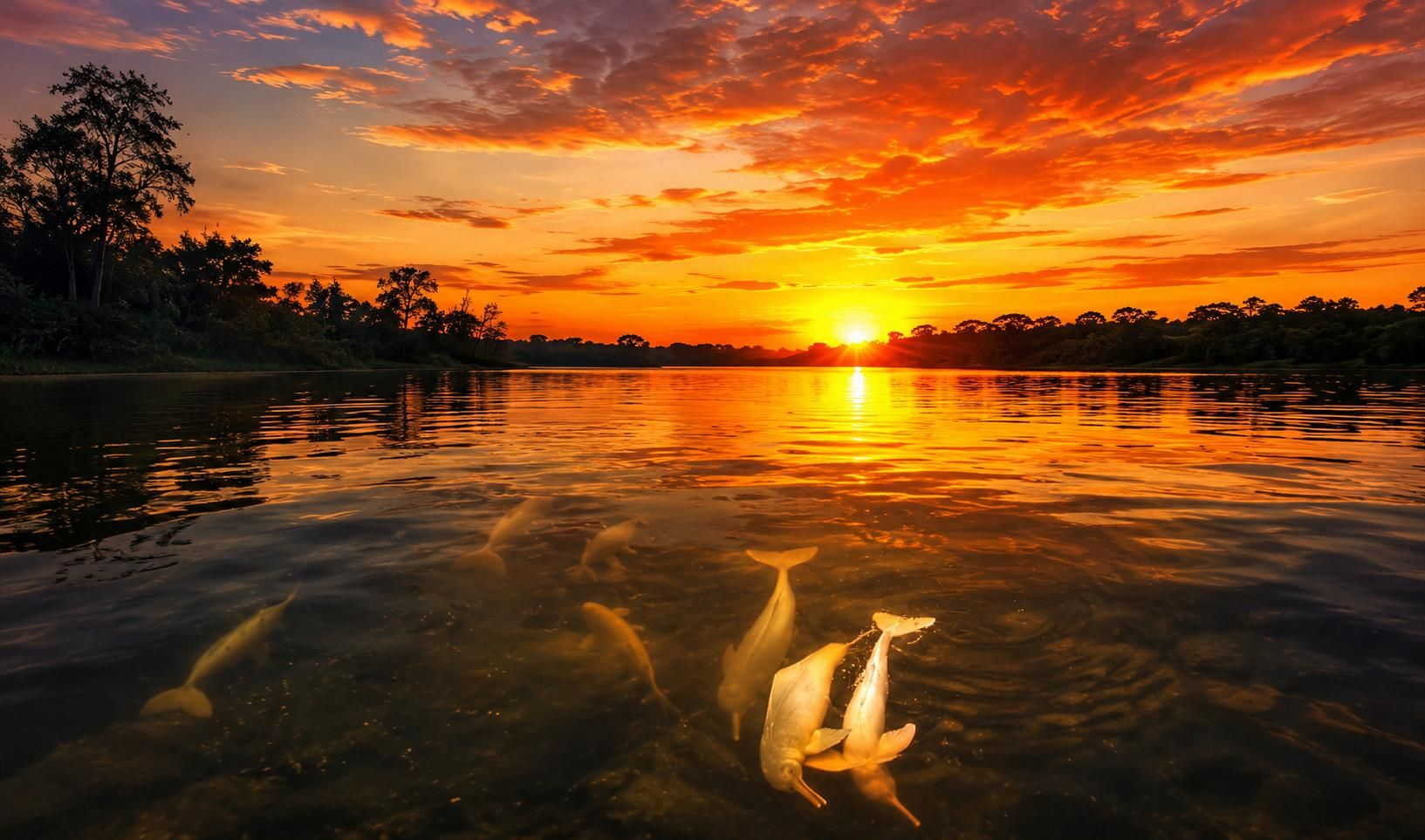
Seeing Pink River Dolphins at Lake Cuyabeno is almost guaranteed.
Birds and mammals: closer than you’d think
This supposed – but non-existing 50-some species gap between Cuyabeno and Yasuní sounds significant on paper, but in practice, it is totally irrelevant. A 4 – 5 day trip to either area will allow you to see only a fraction of either reserve’s icspecies. Your bird sightings depend far more on the expertise of your guide. The best guide is Fabricio, the house guide of my Cuyabeno lodge, who originally was trained by myself. Excursions with him will give you the greatest number of species during your stay. Moreover, the position of your lodge is essential, with my Cuyabeno Lodge being at the best location in Cuyabeno. Both reserves guarantee exceptional for birding, but Cuyabeno is the best for birding by far. The variable that determines what you see is how close your lodge sits to the best wildlife viewint locations.
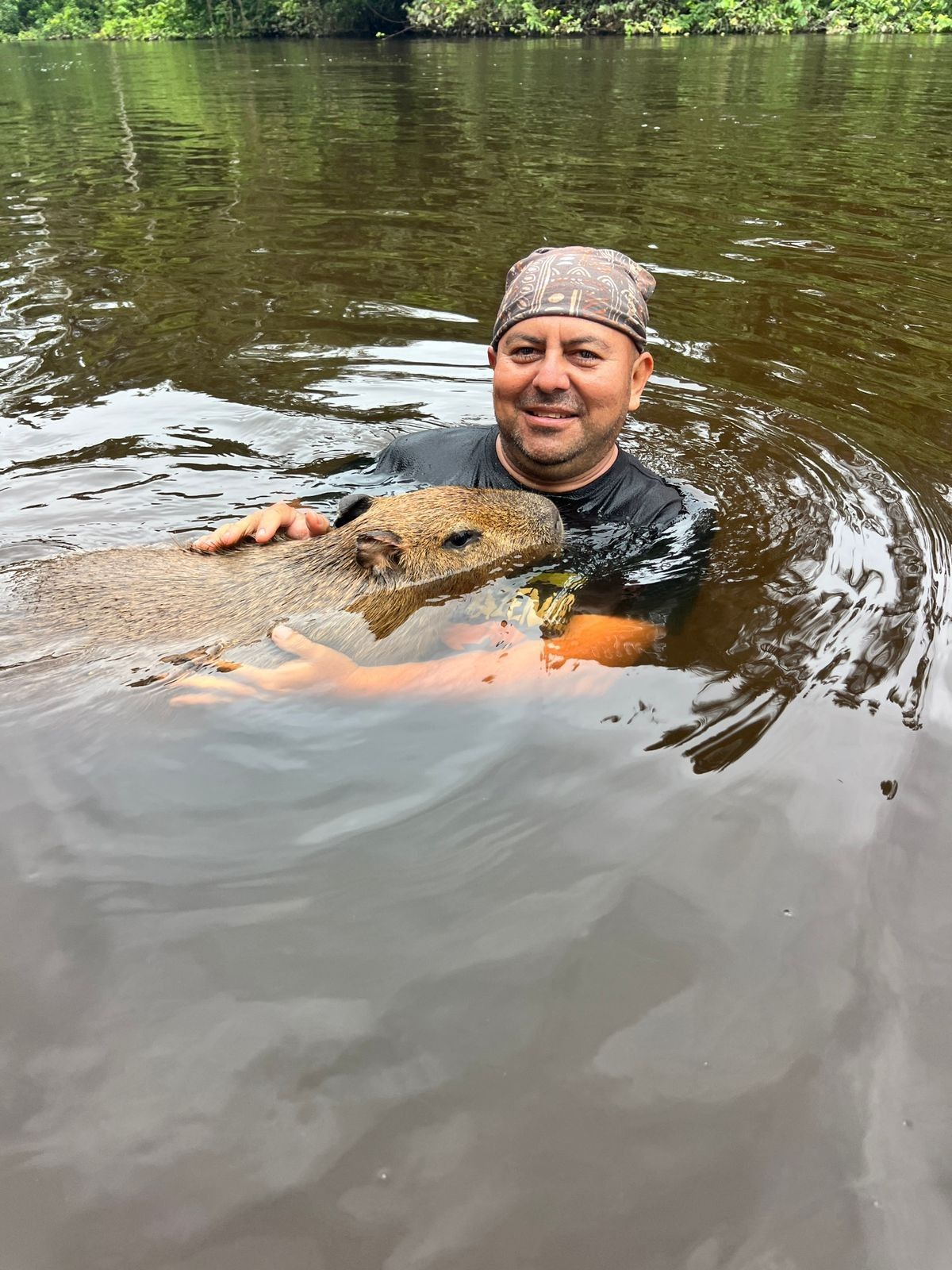
Although not common, capibaras call Cuabeno Home.
Cuyabeno vs Yasuní: how the logistics compare
Cuyabeno’s most common access route runs from Quito in an overnight tourist bus from Quito to the park entrance ( the bridge) which tales about 10 hours. After registration at the ranger station you enter a two river ride to my Cuyabeno Lodge, or up to three hours to the river lodges. Travelers who prefer to fly can reach Coca in about 30 minutes from Quito, then transfer onward. The bus route is o course much more budget-friendly. The canoe leg through the reserve’s entrance waterways is where many guests get to see their first wildlife, as it slowly navigates down the winding Cuyabeno River, spotting animals.
Yasuní/Napo lodges travel mostly through Coca by air from Quito. Most of them use LATAM but they are significantly more expensive. I always use Aeroregional for $120 each leg.

Aeroregional the more economic airline for Coca.
The faster air connection sounds like a clear win, but the onward transfer from Coca to the Yasuní lodges adds significant time on the boringly wide Napo River where no wildlife is to be seen. Moreover, those lodges are somewhere between 3 and 10 times more expensive than the Cuaybeno lodges. Once you account for the full transfer chain, total travel time into Yasuní/Napo can rival Cuyabeno, depending on which lodge you’ve booked.
Cost and lodge quality: what the price difference means
Cuyabeno packages run from $279 to $499 per person for 4 days, with meals, guided excursions, and park fees included. Yasuni/Napo packages run as much as $3000(!) per person for the same duration, with transfer costs often billed separately. For a travelers planning a two-week Ecuador itinerary that might also include the Galápagos or the Andes, that cost gap is significant.
The lodge quality comparison isn’t just about price. Cuyabeno Lodge’s island position on Lake Cuyabeno is a logisitic advantage that no Yasuní/Napo lodge can replicate. Guests have direct lake access for swimming and dolphin watching, a sunset viewing deck overlooking the water, and immediate proximity to the reserve’s most iconic scenery. Guests at the island lodge have no daily boat shuttles typical of river-based lodges in the reserve, a real difference in daily experience. Yasuní/Napo’s higher-end options, including lodges with canopy towers and one with a treetop walkway, are absurdly priced.
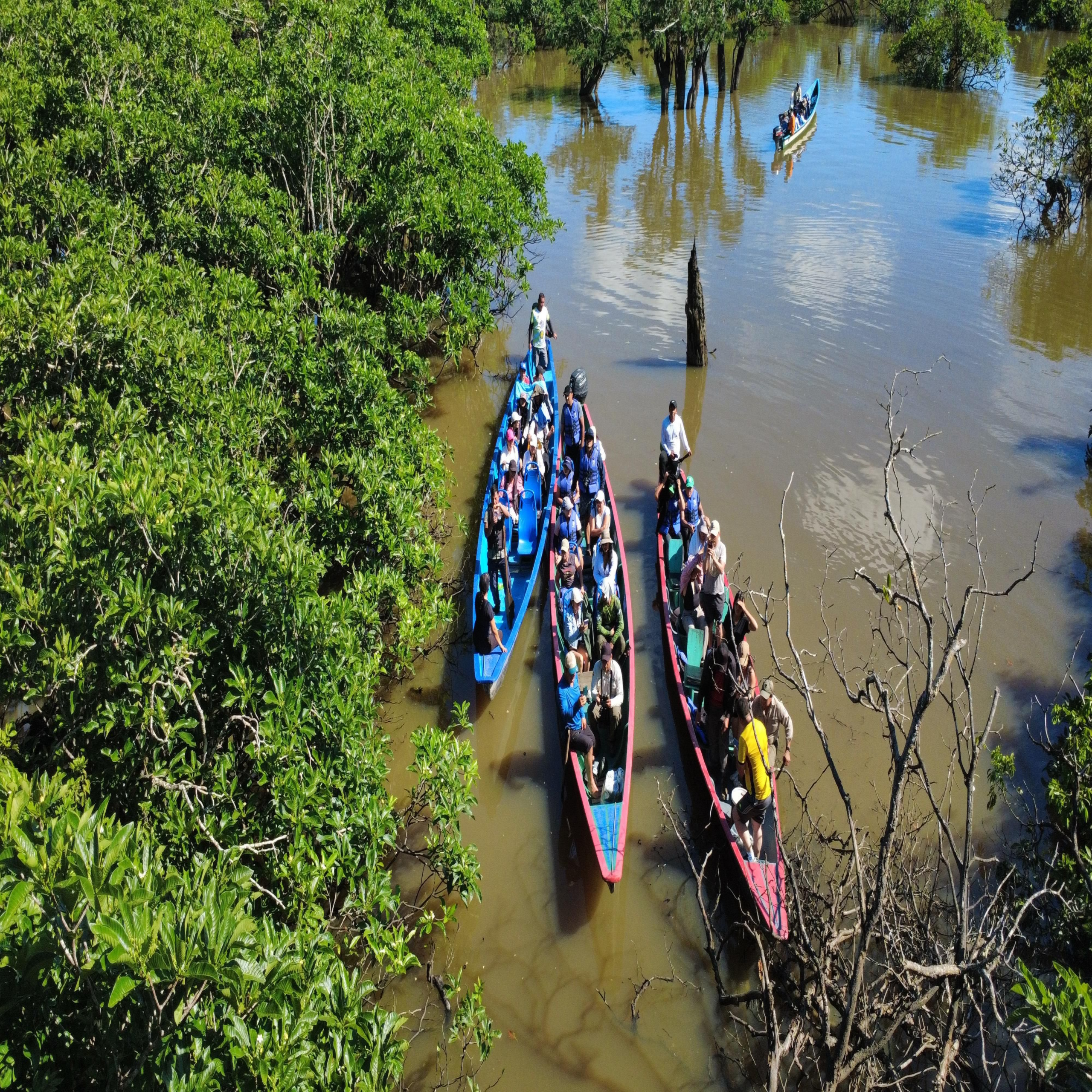
Cuyabeno Lodge guests right in from of the dock.
A Cuyabeno Lodge stay covers guided excursions morning and evening, night walks, swimming and a community visit. Meals are prepared fresh in the jungle, and guests have direct lake access throughout their stay. The lodge’s emphasis on conservation heritage, reflected in its interpretation, programming, and founding principles, adds a layer of credibility that few lodges in either reserve can match.
How the season shapes your experience in both reserves
High water (roughly April through November) floods the forest, opens canoe routes deep into the canopy, and creates the best conditions for pink river dolphins, giant otters, and flooded-forest wildlife. Low water (roughly December through March) exposes riverbanks, concentrates mammals and caimans around shrinking water bodies, and makes hiking more accessible. This is less a weather preference question than a wildlife priority question.
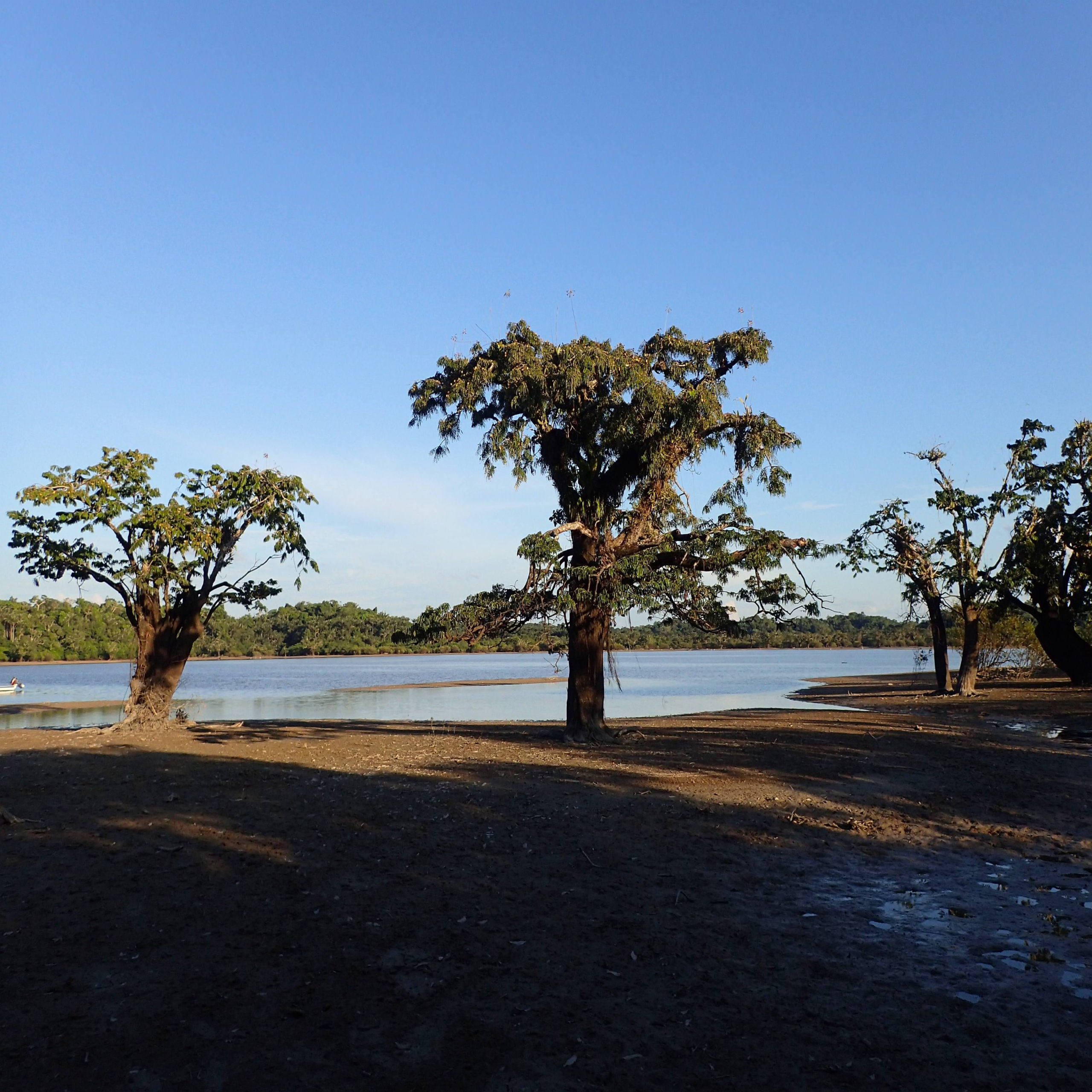
Bonsai shaped macrolobium swamps fall dry during the dry season, creating totally but still fascinating landscapes.
High water is especially rewarding at Cuyabeno’s lake-based lodges. The lake expands, canoe access deepens into the surrounding flooded forest, and dolphin sightings increase around the lodge’s own waterfront. During low water, the Cuyabeno River stays accesible most of the time, but sometimes guest have to walk a few hundred meters to get to the accomodation.
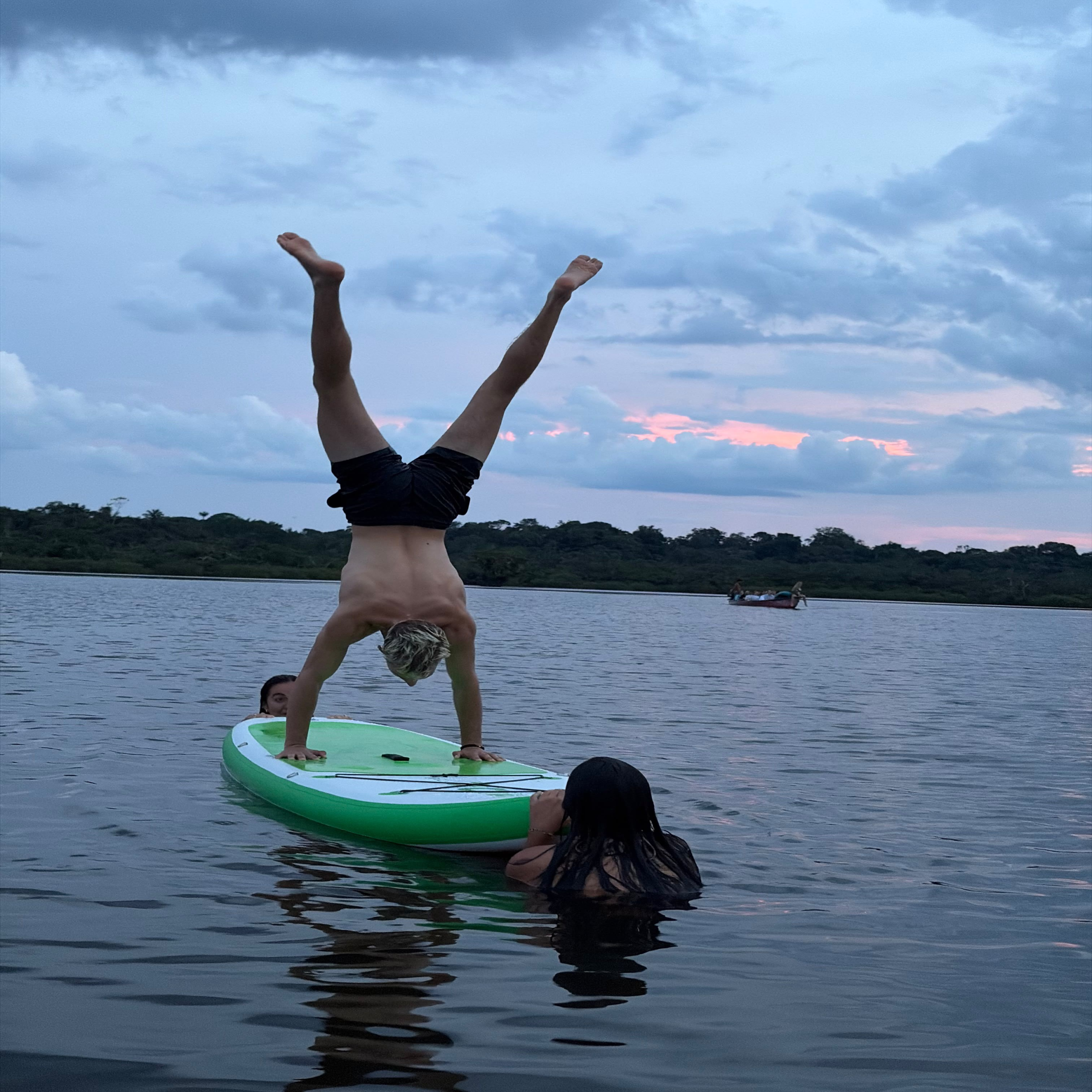
During high water, swimming at Lake Cuyabeno is a thrill, particularly for the guests of the Cuyabeno Lodge, which has paddle boards.
Which reserve fits your trip?
For the vast majority of travelers, particularly those drawn to iconic Amazonian scenery, reliable pink river dolphin encounters, accessible logistics from Quito, and strong value for money, Cuyabeno is the clearer choice. The lake landscape, the direct wildlife access from the lodge, and the price point make it the most rewarding option for a first Amazon trip or for anyone who wants maximum immersion without maximum cost.
Yasuní may make sense for guests seeking the canopy towers that 2 higher-end lodges offer. But for most travelers, the price and nature gaps between the two are too great and the Cuyabeno’s lake-island position with a modest observation tower as well makes the choise really easy.
Still weighing Cuyabeno vs Yasuní for your Ecuador Amazon trip? My Cuyabeno Lodge offers the island lake position, my conservation-rooted professional management, and the direct wildlife access that make this reserve the standout choice for YOU. Reach out via WhatsApp (+593 96 925 7630) or explore the available three to five-day tour packages to find the itinerary that fits your schedule and priorities.
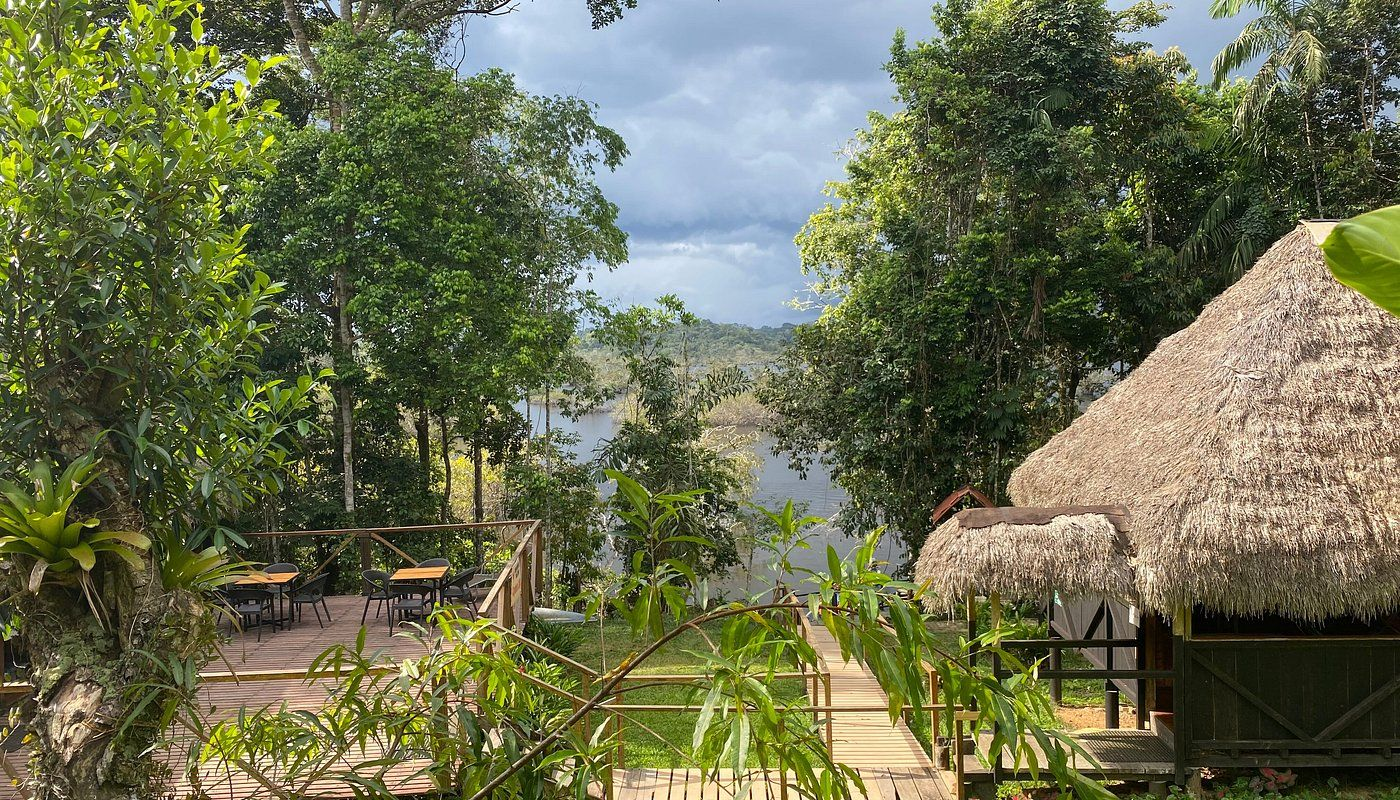
View from the sundeck of the Cuyabeno Lodge onto Lake Cuyabeno.