How good is birdwatching in the Cuyabeno Wildlife Reserve?
The short answer is: it is extremely rich in bird species, but let me tell you a secret: nobody knows how many bird species are found in the Cuyabeno Wildlife Reserve. I am, Dr. Daan Vreugdenhil, and I started ecotourism in 1986 in Cuyabeno. I needed a species list that could compete with the 600+ species list of Limoncocha of the 1970s, kept up by my colleague and friend Dr. Dan Talman. My head guide, Dr. Tjitte de Vries and I took the bird field guide “The Birds of Ecuador by Robert S. Ridgely” and went through the entire book and listed all the species that were likely to occur in the reserve, a list of about 530 species. I still have that list. That is the list that everybody keeps refering to when mentioning 530 species of birds in Cuyabeno.
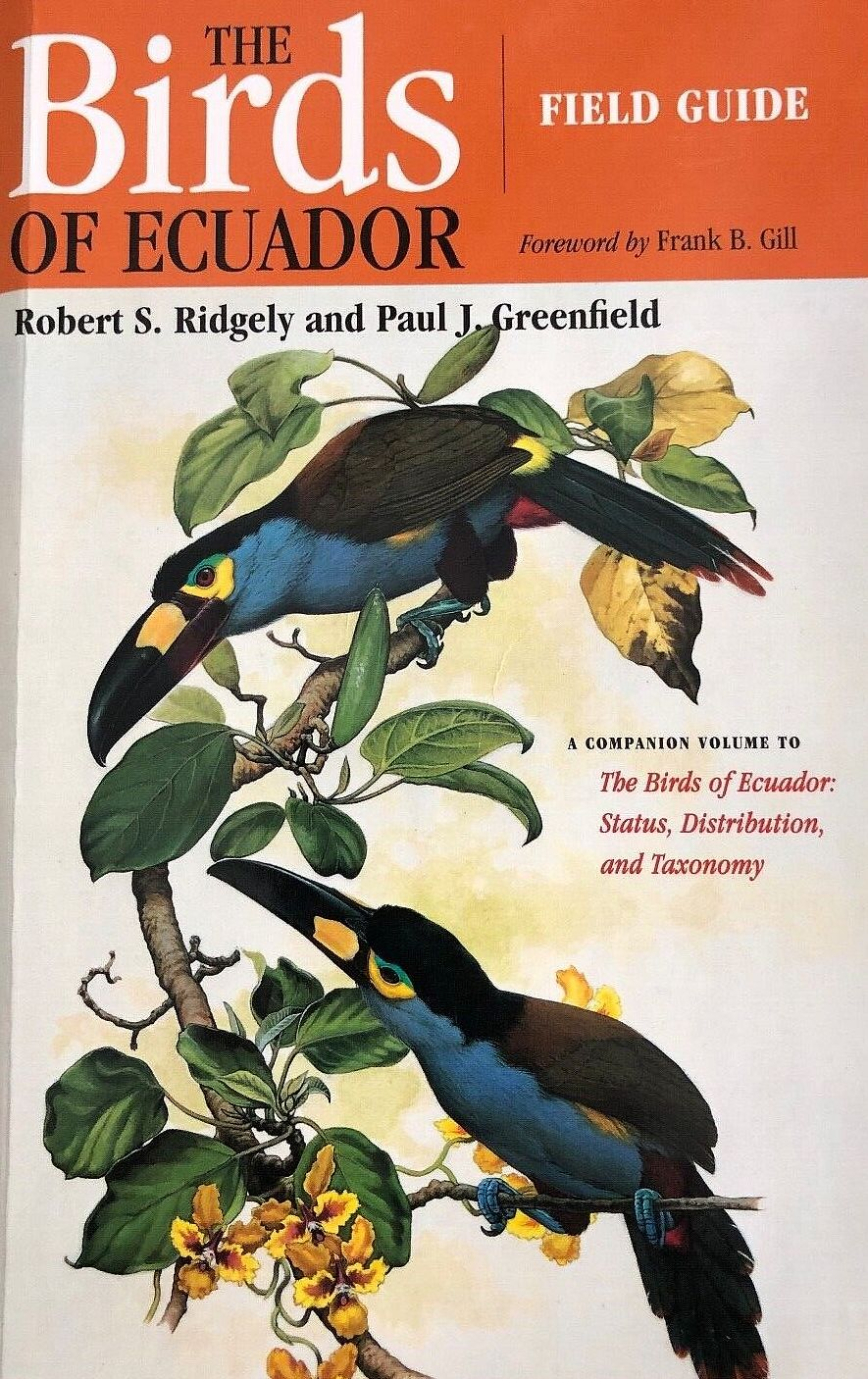
Birds of Ecuador by Robert Ridgely and Paul Greenfield.
In fact, I took Dr. Robert S. Ridgely to Cuyabeno in 1976 in the context of my Amazon of Ecuador study, to produce me the first observation-based list of the bird species. Unfortunately, I lost contact with Bob and that list has never been published. Paul Greenfield designed our beautiful logo.
Nowadays, bird watchers can register their bird observations at the website “eBird“, a global citizen science platform managed by the Cornell Lab of Ornithology. Unfortunate, none of the Cuyabeno guides do so. So, it remains everybody’s guess how many birds there are. BUT, if the little reserve of Limoncocha could accumulate 600+ bird species, it goes without saying that huge areas like the Cuyabeno Wildlife Reserve and Yasuni National Park must have at least matching numbers. So, no birder should ever be disappointed at the birdspecies that could be seen in Cuyabeno.
There is no doubt that Cuyabeno is one of Ecuador’s most productive birdwatching destinations and correctly highly regarded by birdwatches and it was designated Inportand Bird Area, IBA, by BirdLife International, to hold the Global IBA status. It is officially triggered by global criteria A1, A2, and A3, which recognize its vital role in protecting threatened species, restricted-range species, and biome-restricted bird species. Additionally, it was confirmed as a Key Biodiversity Area (KBA)
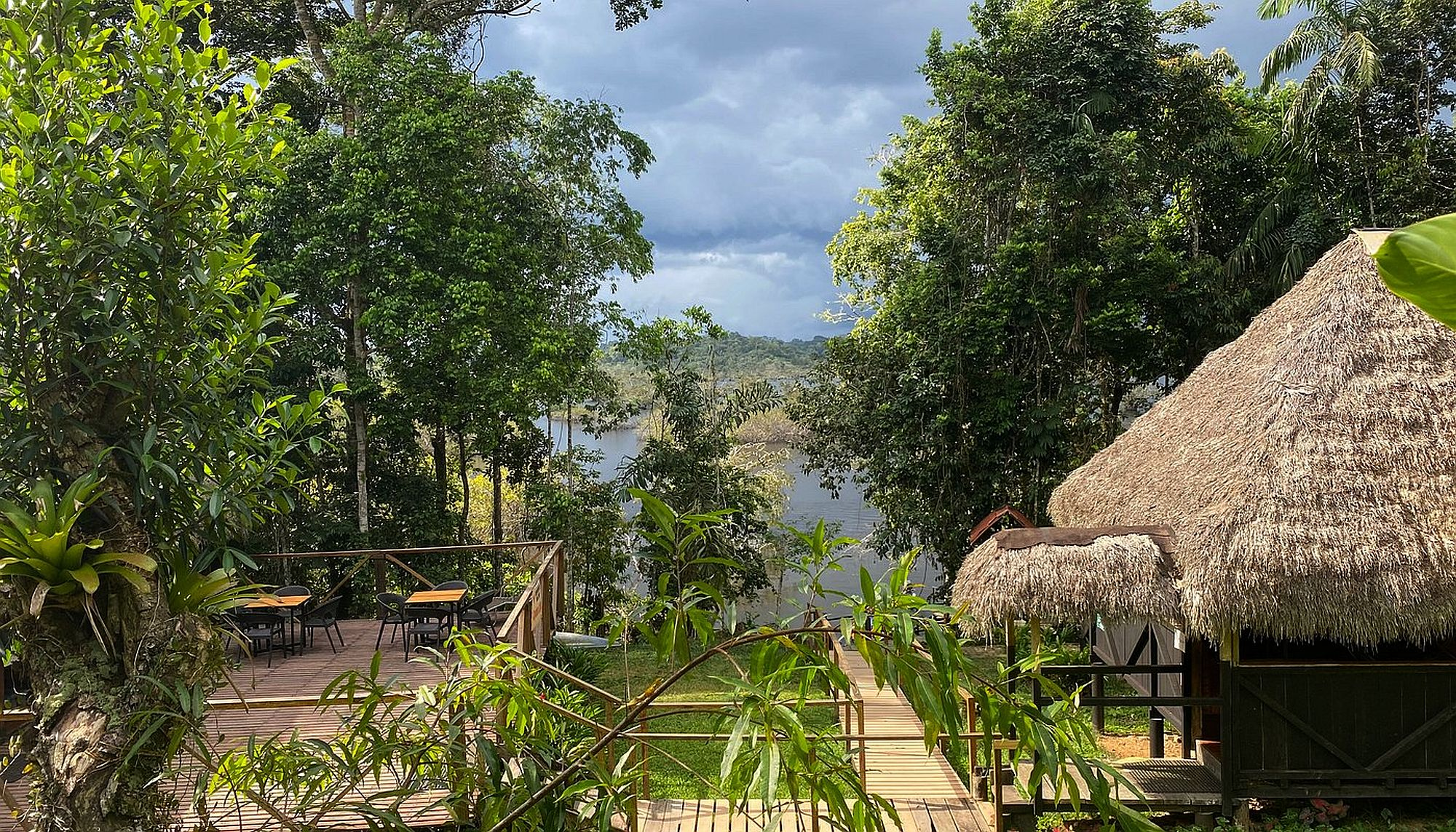
Guests at my Cuyabeno Lodge, my island-based lodge on Lake Cuyabeno (Laguna Grande), commonly report hearing the dawn chorus from their beds before reaching for their binoculars. That detail tells you something useful about this place. This guide covers the four things birders actually need to know: what the species count means in practice, which birds you’ll realistically see, when to go, and how to structure a trip that doesn’t waste your best light.
What 530+ bird species actually means for your trip
The lake-and-forest habitat that drives the numbers
Many Amazon destinations specialize in either strong waterbirds or strong canopy species. Cuyabeno delivers both within the same day’s itinerary. The reserve’s mix of blackwater lakes, flooded forests, river channels, and intact canopies in the upland forest, creates complementary ecosystems that few jungle destinations can match. Along blackwater lake margins with bonsai-shaped Macrolobium trees, concentrate hoatzins, herons, kingfishers and countless other water and shore birds. The higher adjacent flooded forest is home to toucans, macaws, and oropendolas into the canopy above. But what really drives the numbers are the well-drained upland forests where countless species of tropical song birds and humming birds drive the numbers up, although mostly observed by the really good birdwatchers. Most of them could only be recorded by their songs and by bird-netting inventories. The latter has never been done by my knowledge.
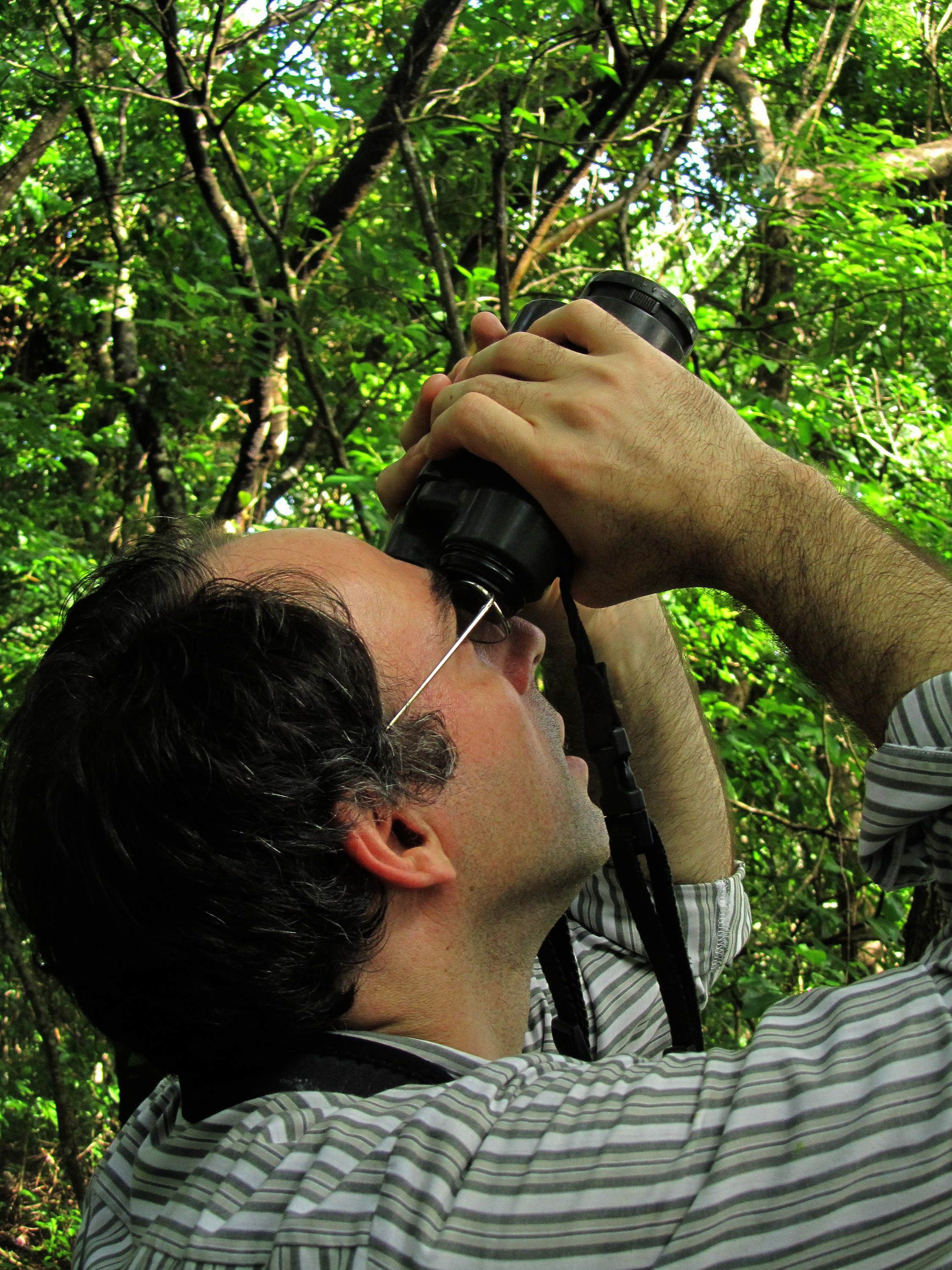
My colleague and friend ornithologist Dr. Oliver Komar is a magician birdwatcher.
Setting realistic expectations before you arrive
One thing is for sure: you will NOT get to see my 1986 species list. What a skilled guide and a four-day itinerary will reliably deliver is a strong showing across the main groups: hoatzins, kingfishers, toucans, at least one macaw species, possibly both the Blue-and-Yellow Macaw and the Chestnut Fronted Macaw, and several waterbird families. Water levels, weather, and the specific route your guide chooses all shape what you encounter. Dawn canoe outings are where the list gets built, and an experienced naturalist guide is one of the most important factors determining your sightings, alongside season, water levels, and the route taken. Book a tour that prioritizes early departures and you’ll get a fundamentally different trip than one optimized for comfort and late breakfasts.
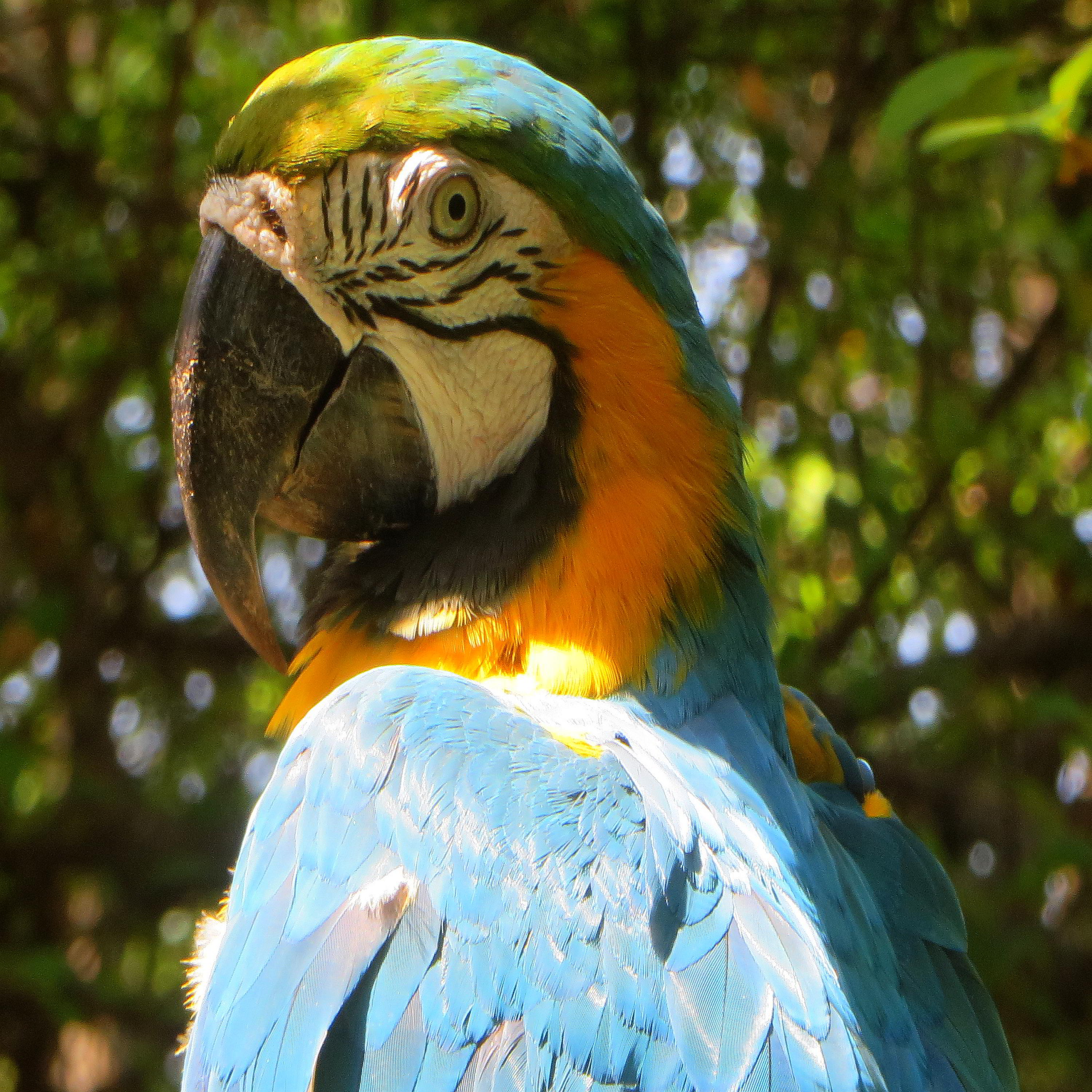
Blue-and-Yellow Macaws are most common around the Cuyabeno Lake.
Birds you’ll almost certainly encounter in Cuyabeno
Waterbirds and riverside species
The hoatzin is Cuyabeno’s signature bird, and it earns that title. Guides point it out already on your first day when you enter the reserve. on nearly every dawn canoe outing, partly because it’s reliably perched in riverside vegetation and partly because nothing else in the reserve looks quite like it. Its prehistoric silhouette, blue facial skin, and spiky crest make for strong first impressions. Beyond the hoatzin, Amazon kingfishers are fast and frequent along the lake margins, while great egrets, tiger-herons, and agami herons work the shallows at a more cooperative pace.
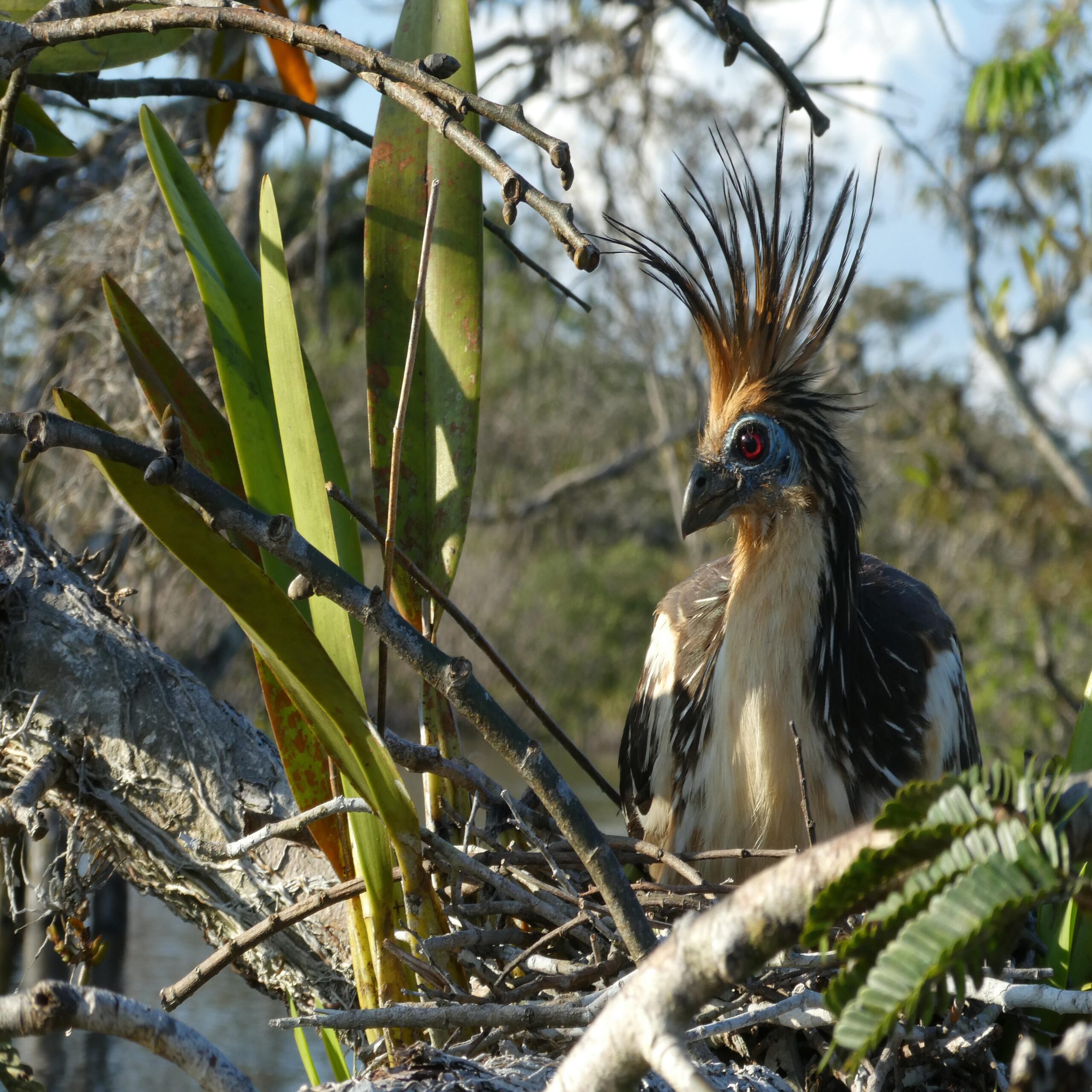
The hoatzin is Cuyabeno’s iconic bird which has its high breeding season in April.
Herons are among the most photogenic subjects in the reserve, patient enough for long looks and camera work from a quietly paddled canoe.
Forest edge and canopy sightings
Blue-and-yellow macaws are the most reliably seen large macaw in the reserve, often spotted flying in pairs at dawn or resting along forest edges as are the Chestnut-fronted Macaws. Scarlet macaws are a genuine possibility, but treat them as a reward rather than an expectation. White-throated toucans appear regularly along waterways at first light, and oropendolas announce themselves with their pendulous woven nests hanging from canopy trees. Parrots and parakeets move noisily at dawn, including blue-headed and mealy parrots. The canopy is a different world at 6 a.m., and the birders who show up for it leave with a meaningfully longer list.
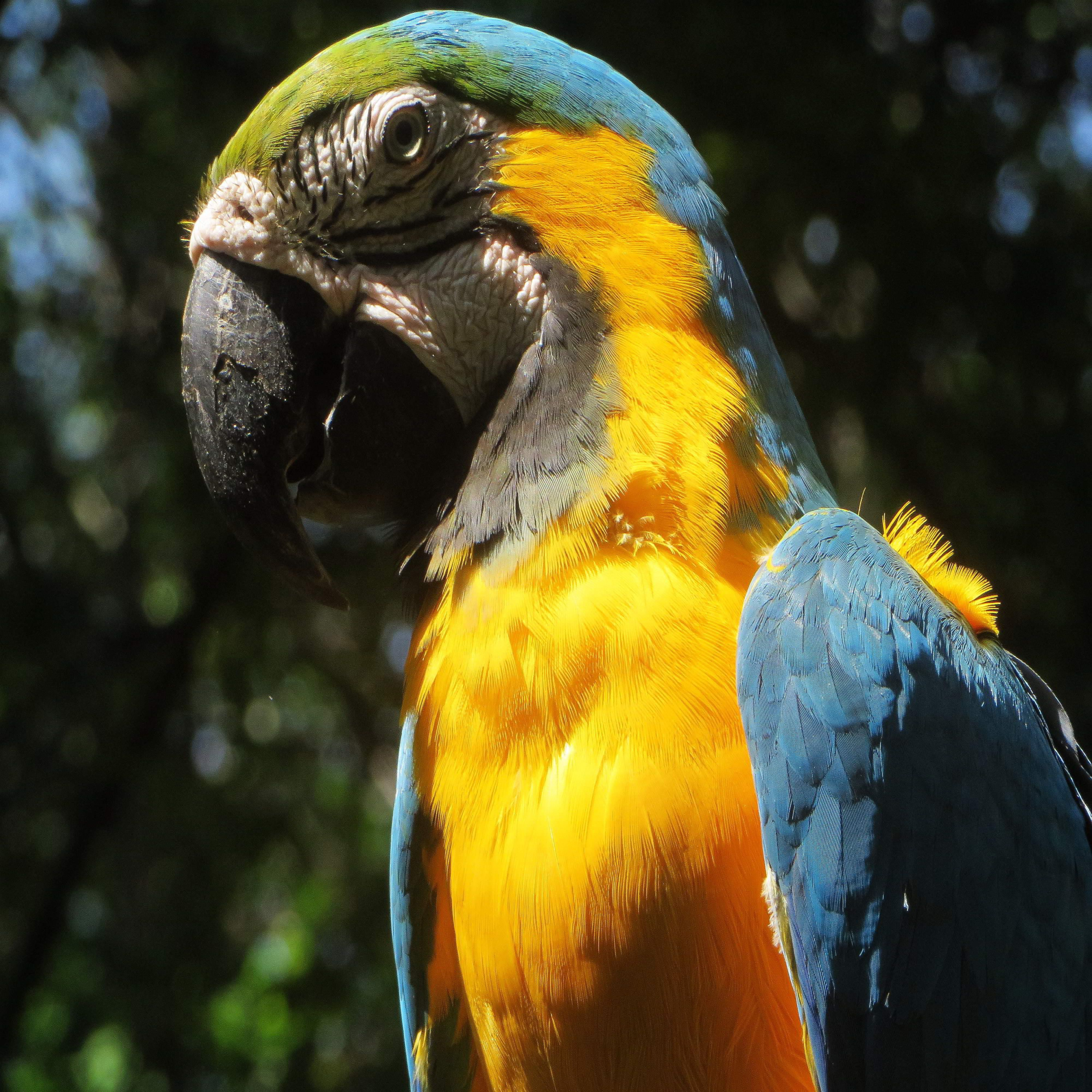
Blue-and-yellow Macaws are the most common parrot species in Cuyabeno.
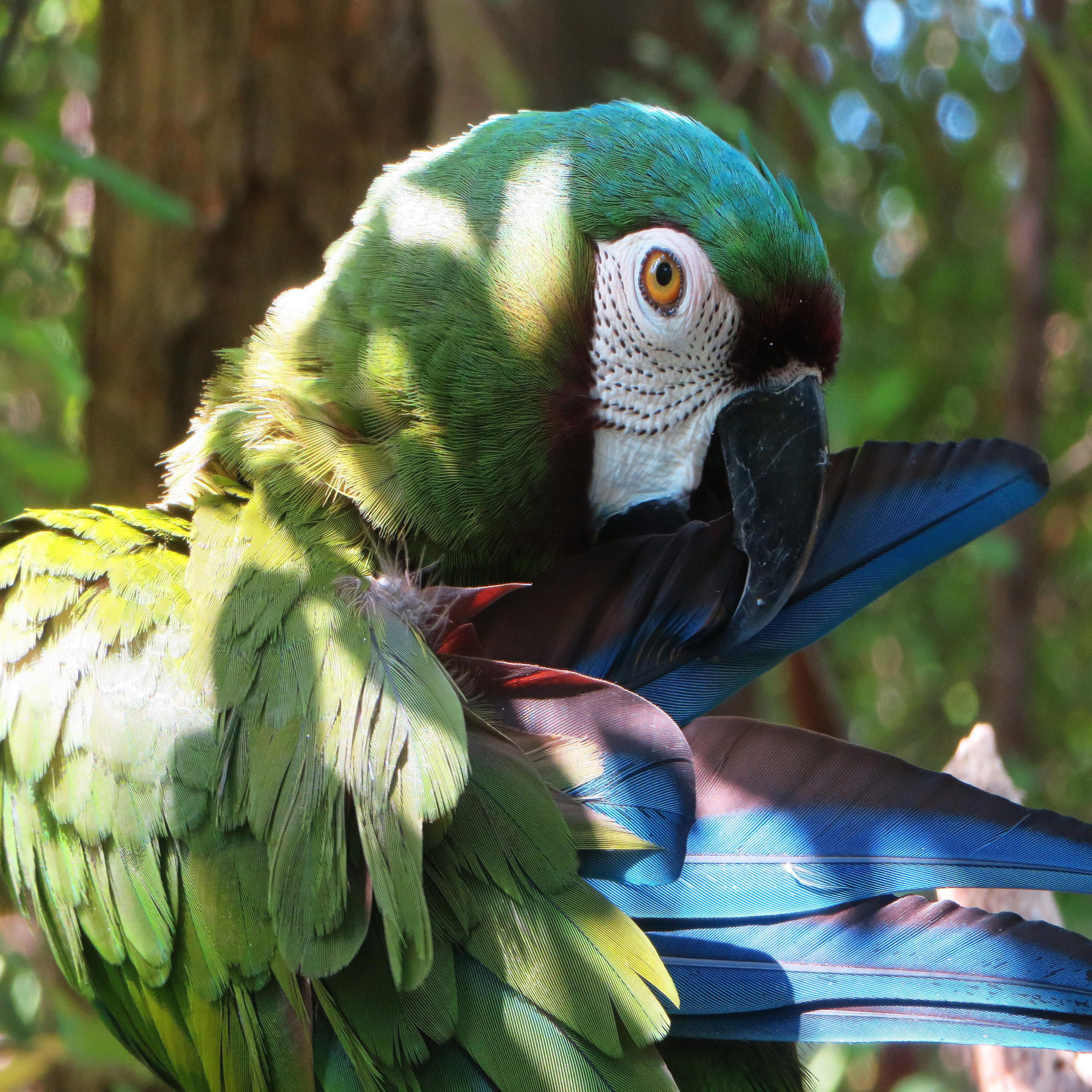
Less colorful but probably more common is the Chestnut-fronted Macaw in Cuyabeno.
Best time to visit and why your daily schedule matters more than the month
Seasonal birdwatching in Cuyabeno: dry vs. wet
June through September is the recommended window for birders who want easier forest trail access. Lower water levels concentrate wildlife near remaining channels and lagoons and make terrestrial walks more practical. The wet season, which can broadly span late in the first quarter through mid-year, though timing varies, opens up flooded forest by canoe and delivers strong aquatic species sightings in habitats you simply can’t reach on foot. Neither season is a poor choice; they produce different experiences. Shoulder months like March, April and July, August tend to balance navigable waterways with accessible trails, and many experienced guides favor them precisely for that flexibility.
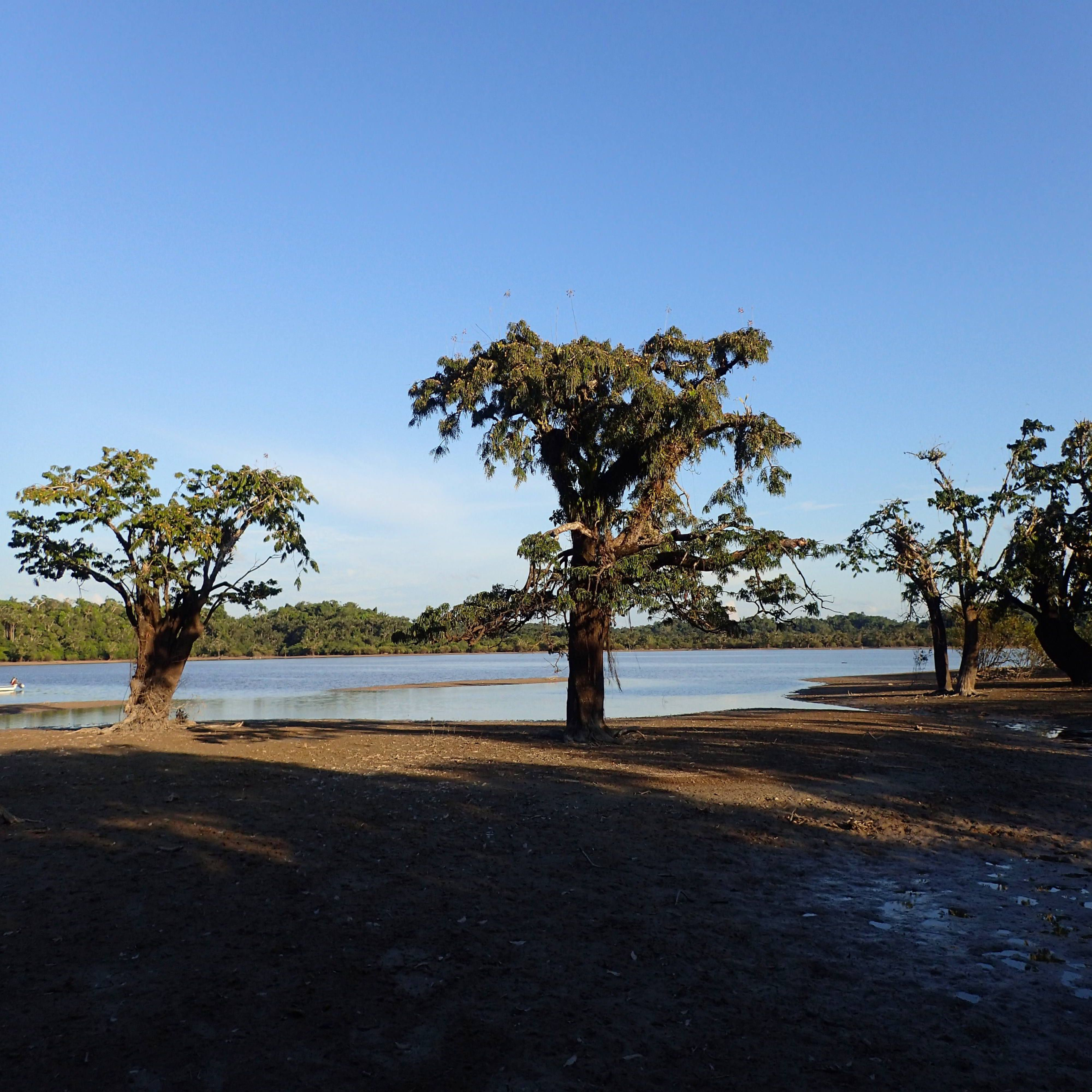
Dry season in Cuyabeno has many different bird species in Cuyabeno.
The dawn window is your most valuable asset
Regardless of month, the first two hours after sunrise produce the majority of sightings. Bird activity drops sharply by mid-morning as heat builds and calling fades. Structure your days around this fact: every excursion goes at dawn or dusk, midday is rest and gear maintenance, and no early light gets spent on logistics or slow departures. This is where lodge position becomes a birder’s most practical variable. That’s exactly where your choice of lodge stops being a comfort decision and starts being a birding decision.
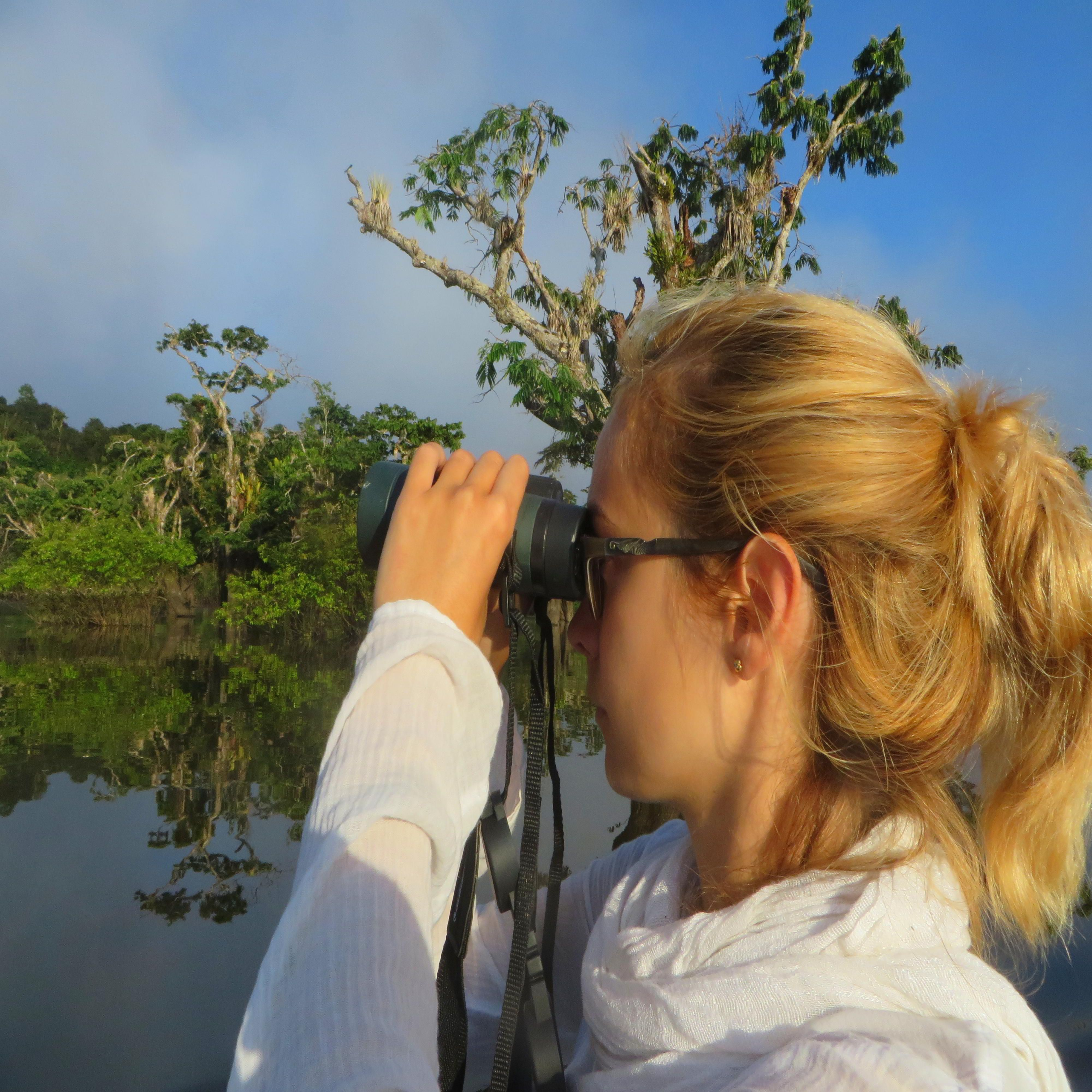
Dawn, before breakvast at the Cuyabeno Lodge is the best time for birdwatching.
Choosing a tour and lodge that doesn’t cost you prime birding hours
Tour length: why four or five days is the birder’s minimum
A three-day tour provides only two dawn outings, which limits how many habitat types you can cover. A four- or five-day program adds morning river runs, excursion on Lake Cuyabeno and its surrounding swamps, as well as birdings on the forest trails. To stack your species list you really need 4 – 5 day tours. Dedicated birding itineraries at the Cuyabeno Lodges include dawn birding and our guide Fabricio is the best birder in Cuyabeno. The difference between a generalist wildlife guide and a birding-focused naturalist makes all the difference for real birdwatchers.
Why lodge location matters as much as the itinerary
River-based lodges in the reserve can require a substantial motorized canoe commute, varying from 20 – 35 minutes, to reach Lake Cuyabeno’s open water, swamps and upland forest trails. That’s a significant slice of peak dawn birding time gone each way, every morning of your stay, which compounds into hours of missed prime light. My Cuyabeno Lodge sits on its own island directly on the lake, giving guests immediate access to productive waterbird habitat from the dock. No lengthy commute, no motor noise cutting through the dawn chorus, no delay. For serious birders, the location is not a small detail; it’s the the most essential detail, together with a top quality guide, like Fabricio.
Cuyabeno is worth the early mornings
Cuyabeno delivers on its reputation, and the habitat explains why. A reserve with 550-plus recorded species, overlapping lake and forest habitats, reliable signature birds from day one, and year-round productivity gives you a genuine foundation for a worthwhile trip. Your job is to match your plan to your goals: four to five days minimum, June through September if trail access matters most, and a lodge whose location doesn’t trade your best birding hours for boat time.
If you want direct lake access from the first morning, canopy forest within reach before breakfast, and guides who understand what birders are actually looking for, reach out to our team at Cuyabeno Lodge to talk through the right itinerary for you.
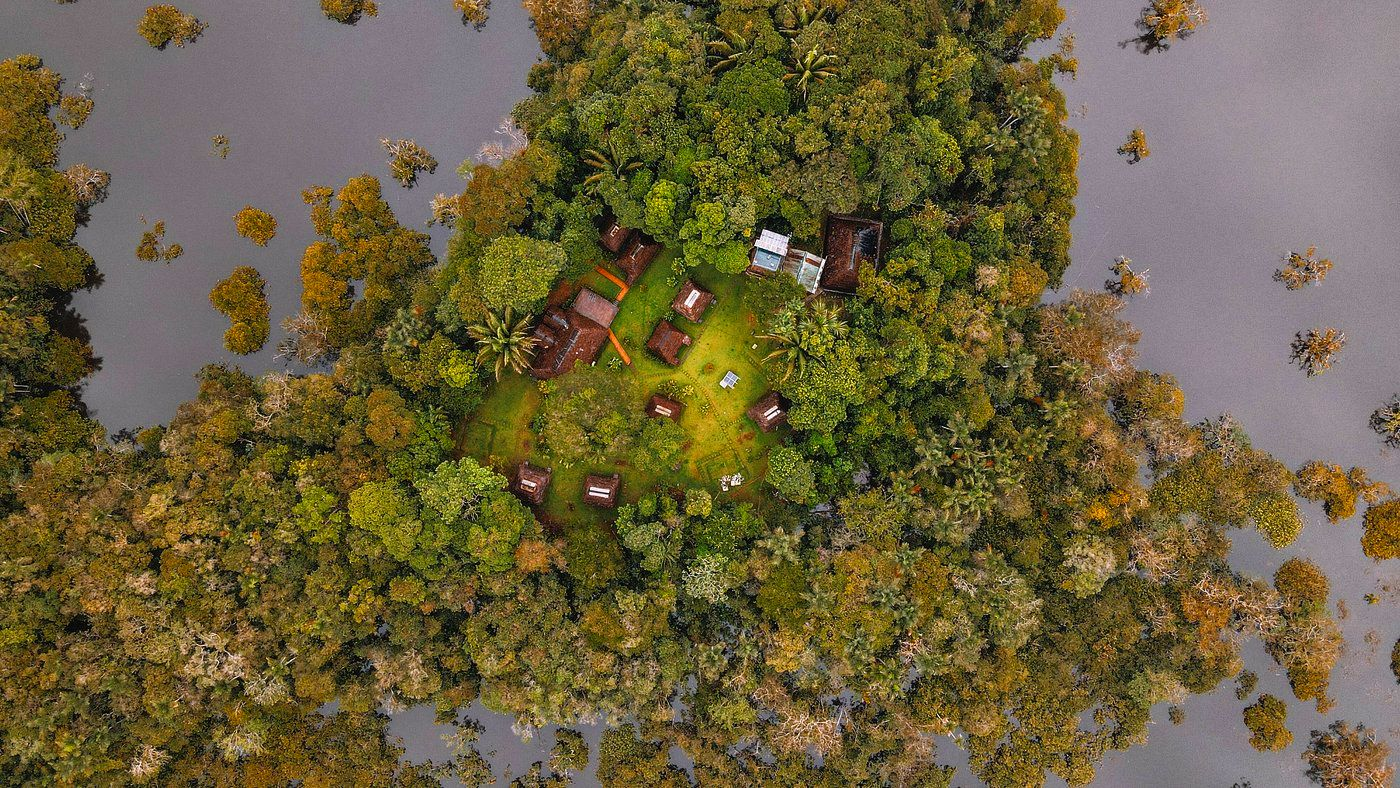
My cuyabeno lodge, is built on an island in Lake Cuyabeno. The apparant land bridge is acctually flooded swamp 10 months of the year.