Travel Options to get from Quito to Cuyabeno
You’ve booked your Cuyabeno trip, your dates are locked in, and now you’re staring at a map trying to make sense of the gap between Quito, perched at 2700 meters in the Andes, and a flooded jungle reserve tucked near the Colombian border. This Quito to Cuyabeno travel guide breaks down all three legs of that journey so the distance stops feeling abstract. You get yourself to Lago Agrio, transfer by road to the Cuyabeno Bridge, then take a motorized canoe deep into the reserve. Budget roughly 12, 14 hours from Quito to your bunk, and plan to arrive at the lodge by early afternoon.
Quito to Cuyabeno travel options: bus or flight?
The overnight bus from Quitumbe terminal
The most common approach for Quito to Cuyabeno travel is an overnight bus from Quito directly to the entrances of the Cuyabeno Wildlife Reserve. Alternatively one can take the nightbus from Quitumbe to Lagoagrio and from there another bus to the park entrance. Transportes Putumayo runs a direct service departing around 21:00, 21:30, stopping in Lago Agrio and continuing to Puente Cuyabeno, with arrivals around 08:00, 09:30. The fare runs approximately $16, $22, and the full ride takes about 12 hours. If you’d rather connect through Lago Agrio separately, later evening buses depart between 22:00 and 23:50 for roughly $14, $17 and arrive in Lago Agrio around 06:00, 08:00.
Arrive at Quitumbe at least one hour before your bus to confirm the platform and buy your ticket. Some operators skip Tuesdays, so double-check before you show up. The direct Puente Cuyabeno service is the cleaner option for first-time travelers because it eliminates one connection and puts you at the bridge right when lodge transfers are staging.
A better option however is to take the tourist bus from Quito to the park entrance for $37 one way.
What about flying?
As of 2026, no nonstop flights operate between Quito (UIO) and Coca with Aeroregional which takes 30 minutes. If flight availability changes before your trip, a 35, 40-minute hop would save significant ground time, but it only works if the flight times sync with the canoe departure window at the bridge. Missing that window typically means waiting a full day. For now, the overnight bus remains the practical standard for reaching Lago Agrio.

The final leg: road transfer and canoe into the reserve
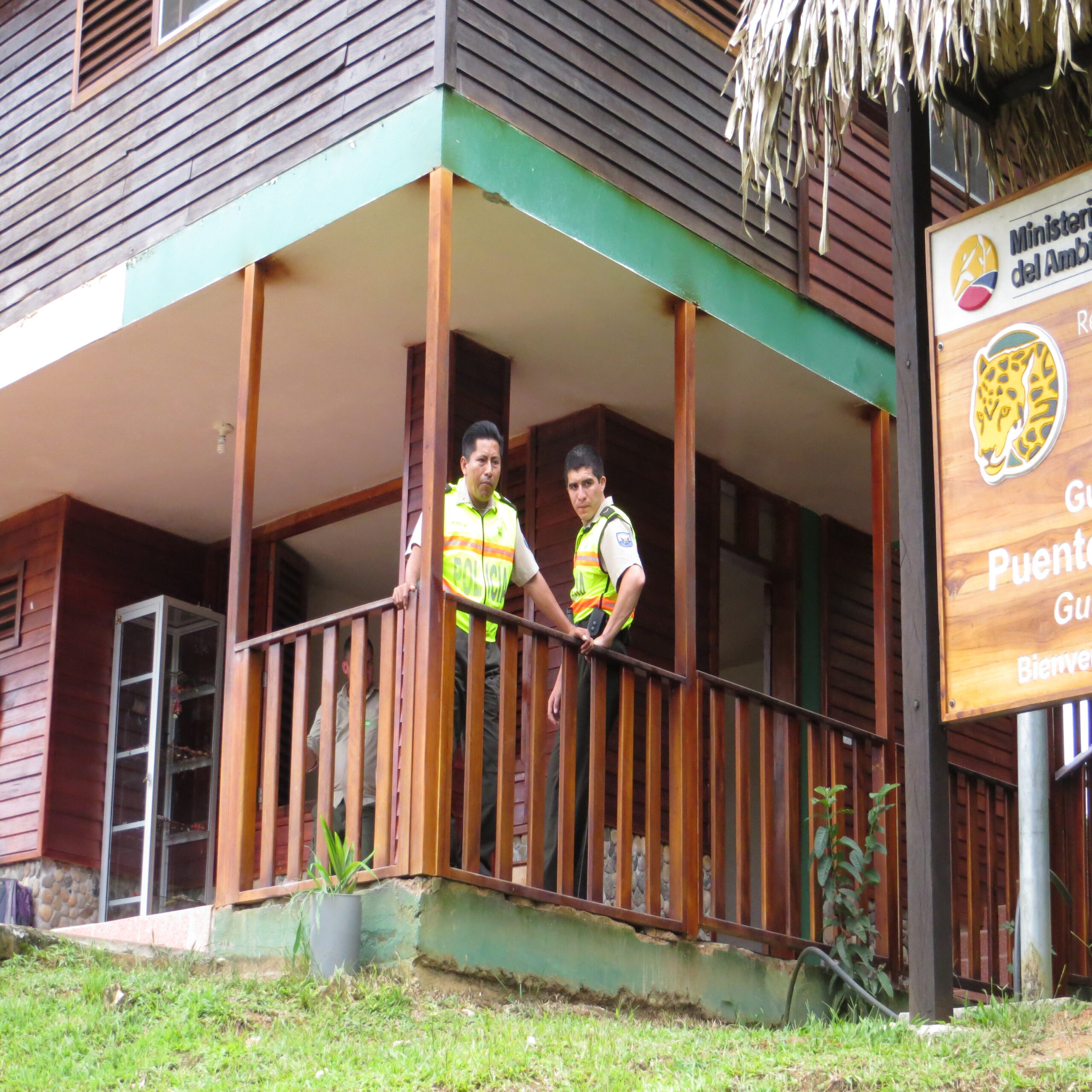
From Lago Agrio to Puente Cuyabeno
Once you’re in Lago Agrio, you need a road connection to the Cuyabeno Bridge, about 1.5, 2 hours south. Transportes Petrolera and Transportes Putumayo run local buses from the Lago Agrio terminal roughly every hour in the morning, at around $5, $6 per person. To make it to the bridge in time for the canoe departure, board before 08:30. Lodge-coordinated shared transfers typically stage at a fixed meeting point like Hotel Arazá and depart around 09:15, 09:30. If your lodge is handling the transfer, they’ll tell you exactly where to be and when.
The canoe ride into Lake Cuyabeno
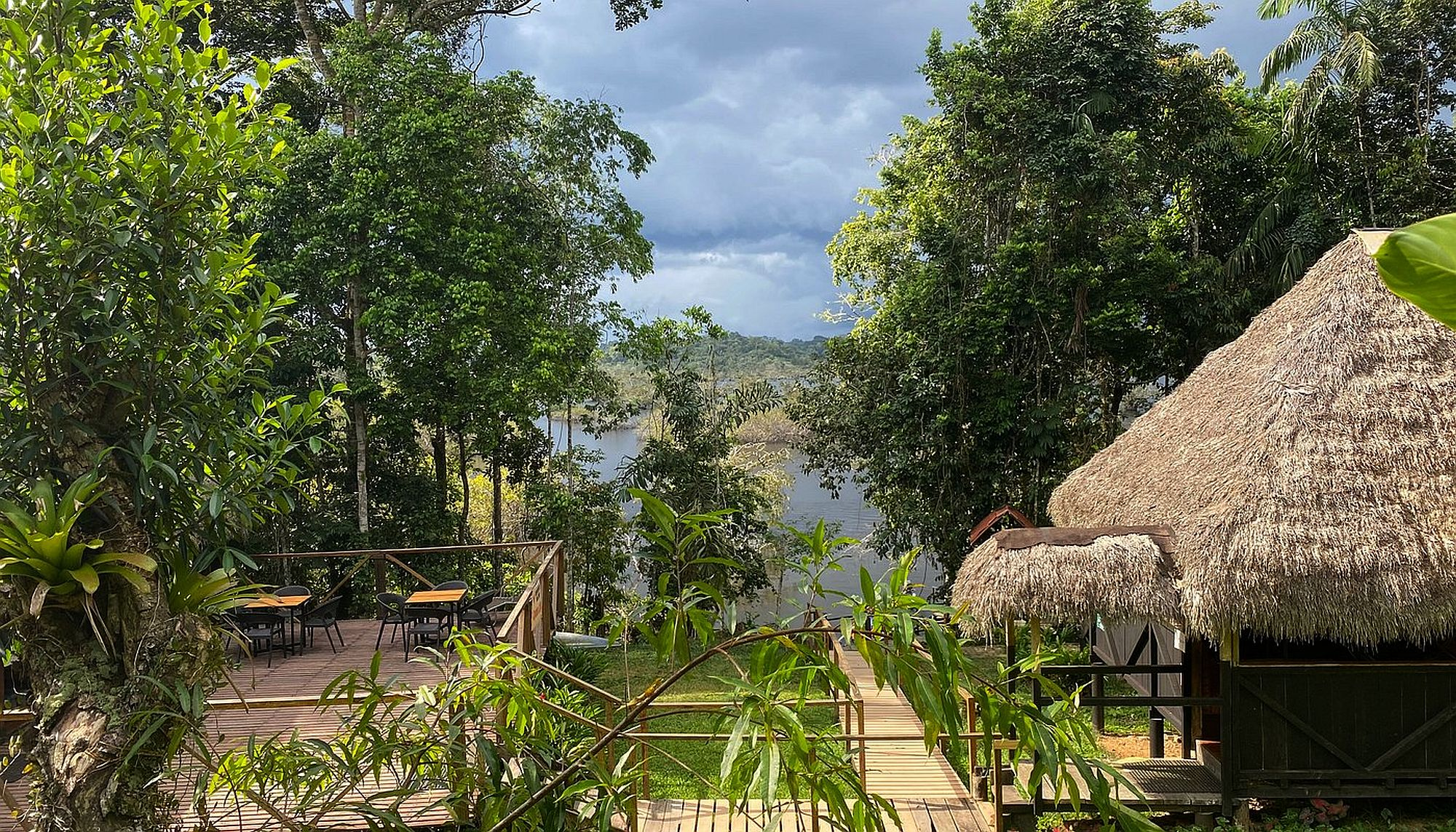
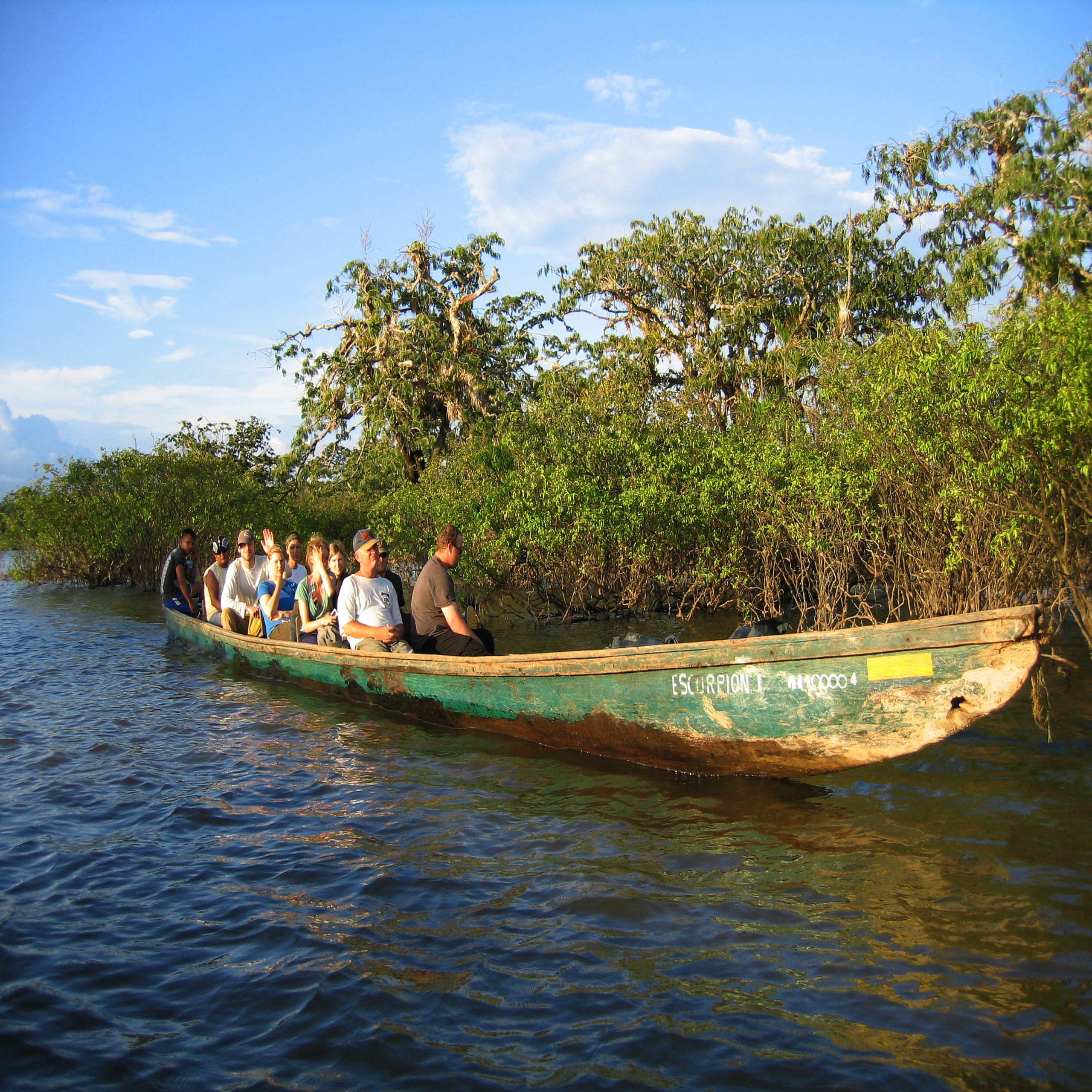
From the bridge, a motorized canoe carries you into the reserve. Plan on 2, 3 hours in the wet season when water levels are generous, and potentially 3, 5 hours during the drier months when the river runs lower and the canoe must pick its route more carefully. Flooded forest opens up around you, macaws cut across the canopy overhead, and the first river wildlife appears at close range. Most guests reach their lodge by early to mid-afternoon, having left Quito the previous evening.
What to pack and watch for on the way
Packing for the bus and jungle arrival
What you carry on this trip matters more than usual because luggage gets loaded in and out of buses, minivans, and canoes. Soft duffels or backpacks work far better than rigid checked-style bags. Keep a dry bag or waterproof pack cover accessible for the canoe leg, and put mosquito repellent with DEET, a light rain jacket, and a change of clothes in your carry-on rather than buried in your main bag. Bring snacks and a water bottle for the overnight bus. A neck wallet or hidden pouch keeps your cash, passport, and cards secure without advertising them.
Safety and common disruptions
While european and american embassies give a general safety warning for any area close to the border with Colombia, the Cuyabeno Wildlife Reserve has only suffered from one incident since its creation almost half a century ago.
Quito to Cuyabeno travel time and cost: what to expect
How the Cuyabeno Lodge coordinates your arrival
The Cuyabeno Lodge coordinates transfer logistics with guests ahead of departure. Expect confirmation of your transfer timing, a clear meeting point in at the Coca airport if you are flying and the ability to ask questions as your trip approaches. For first-time Amazon travelers navigating an unfamiliar city where few services operate in English, that direct line of communication matters. You won’t have to decode bus schedules alone or guess whether your connection will hold, confirm the specific communication channel your lodge uses when you book.
The journey in full
The Quito to Cuyabeno travel sequence is straightforward once you see it laid out: overnight bus to the park entrance at the bridge, then the canoe into the reserve. Total travel time runs about 10 hours by bus. Book through your lodge, let them handle the coordination, and don’t schedule anything critical the day you arrive. By the time the canoe slows and the dock appears through the trees, the distance you covered feels earned, and the Amazon begins in earnest.